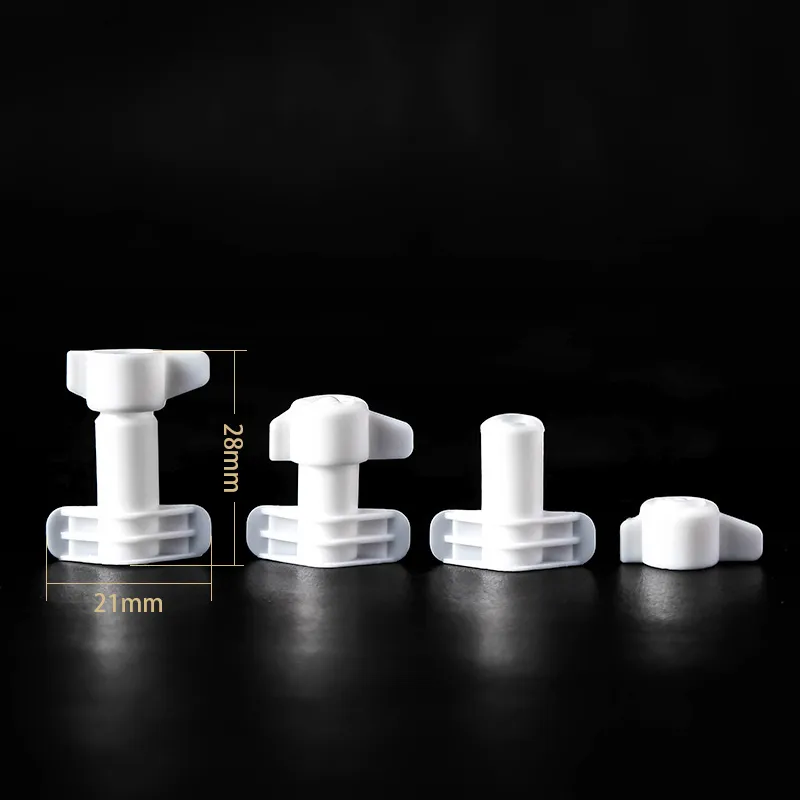







Rice and flour are increasingly sold in flexible packaging formats because these bags are lightweight, space-efficient, and practical for transportation. However, once the package becomes heavier, carrying the bag can become less convenient for retailers and consumers.
A plastic rice bag handle adds a dedicated gripping point that makes the package easier to lift, move, and carry. But not every rice bag requires the same handle. Package weight, film structure, bag dimensions, production equipment, and consumer requirements all affect the appropriate design.
For rice brands and flexible packaging manufacturers, customization allows the handle to be developed around the actual packaging rather than simply selecting a standard component. Today, Sanrun, a plastic rice handle manufacturer, will show you how plastic rice bag handles help your business and how to customize the suitable one for your brands and businesses.
Why Customize Plastic Handles for Rice Bags?
Match Different Rice Bag Weights
A 5 kg rice bag does not have the same requirements as a 10 kg or 20 kg package. As the filled weight increases, the handle needs sufficient strength and an attachment structure capable of transferring the load without damaging the packaging film.
Custom rice bag handle design allows the handle dimensions, thickness, and connection structure to be matched to the actual package weight.
Improve Carrying Convenience
The purpose of a handle is not only to support weight but also to make the package comfortable to carry.
The grip opening, hand contact area, and handle position can be adjusted according to the package size and expected carrying method. This is particularly important for larger retail rice bags.
Match Different Flexible Packaging Structures
A handle interacts directly with the packaging structure. Film material, film thickness, bag construction, and sealing areas can all affect how the handle performs.
A plastic rice bag handle therefore needs to be evaluated together with the bag rather than treated as an independent component.
Support Brand Differentiation
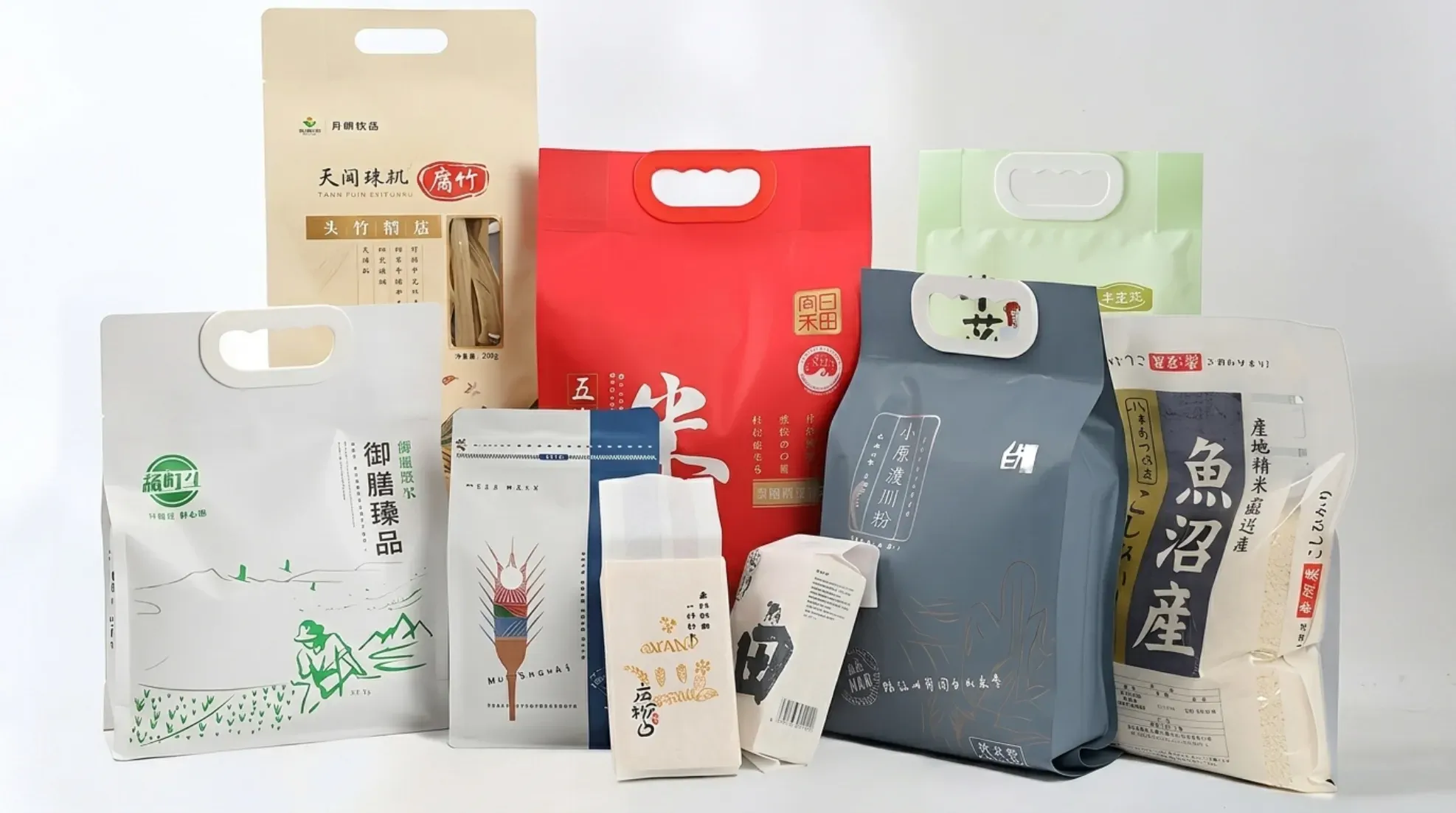
Customization can also involve appearance. Brands may specify particular colors, shapes, or other visual characteristics so the handle fits the overall retail packaging design.
For premium or differentiated rice products, the handle can become part of the packaging identity while providing a practical benefit.
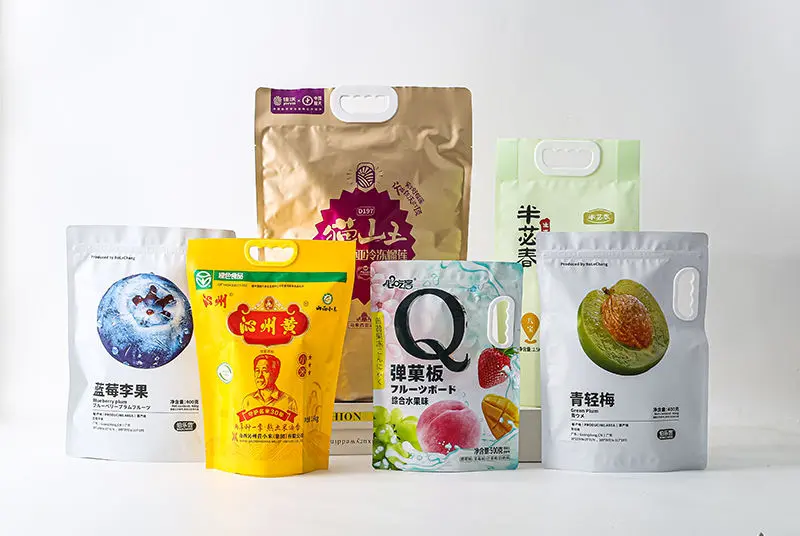
What Should Be Customized in a Rice Bag Handle?
Customization does not necessarily mean creating an entirely new product. It means modifying the key characteristics that affect performance and appearance.
Handle Size and Shape
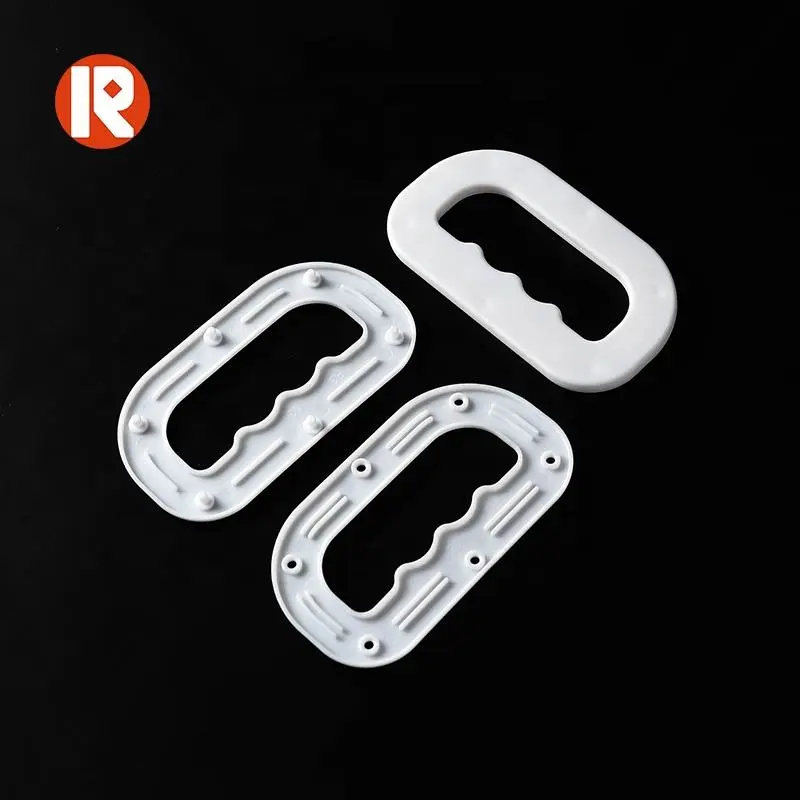
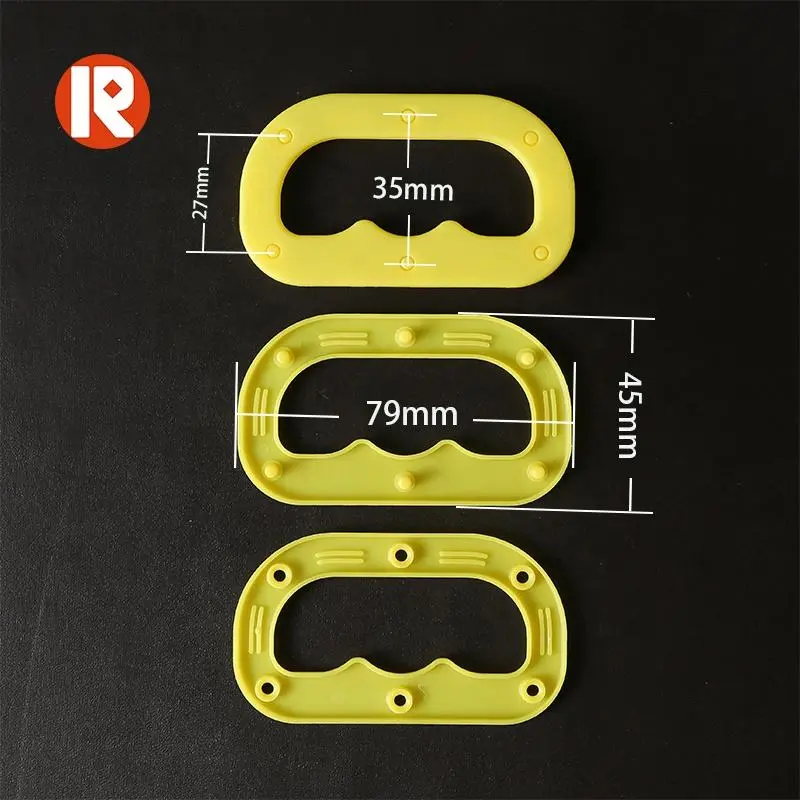
The grip opening, overall dimensions, thickness, and shape can be adjusted according to the package weight and intended user experience.
A compact handle may be appropriate for smaller bags, while larger packages may require a more robust plastic bag handle with a larger grip area.
Handle Material
PP and PE-based materials are commonly considered for plastic packaging handles.
The appropriate material depends on the required balance of strength, flexibility, impact resistance, and manufacturing requirements. Material selection should also take the packaging film into account.
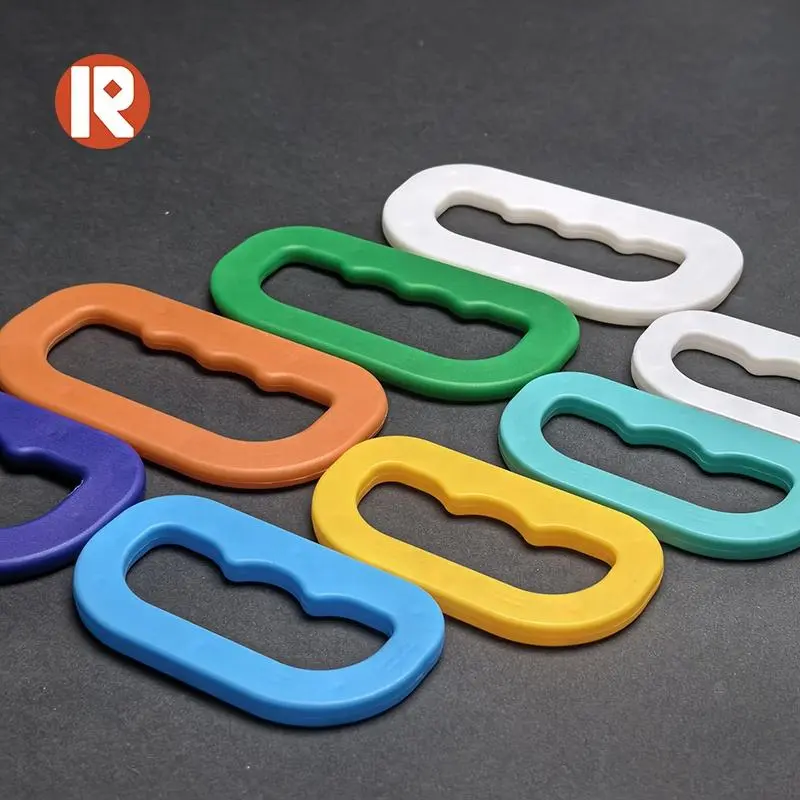
Handle Color
For branded products, handle color can be matched with the packaging artwork or brand identity.
This allows the handle to integrate visually with the bag rather than appearing as an unrelated component.
Attachment Structure
The attachment area is one of the most important parts of the design.
The connection needs to withstand the load created when the filled bag is lifted. Its structure should therefore be developed according to the film properties, bag construction, and expected package weight.
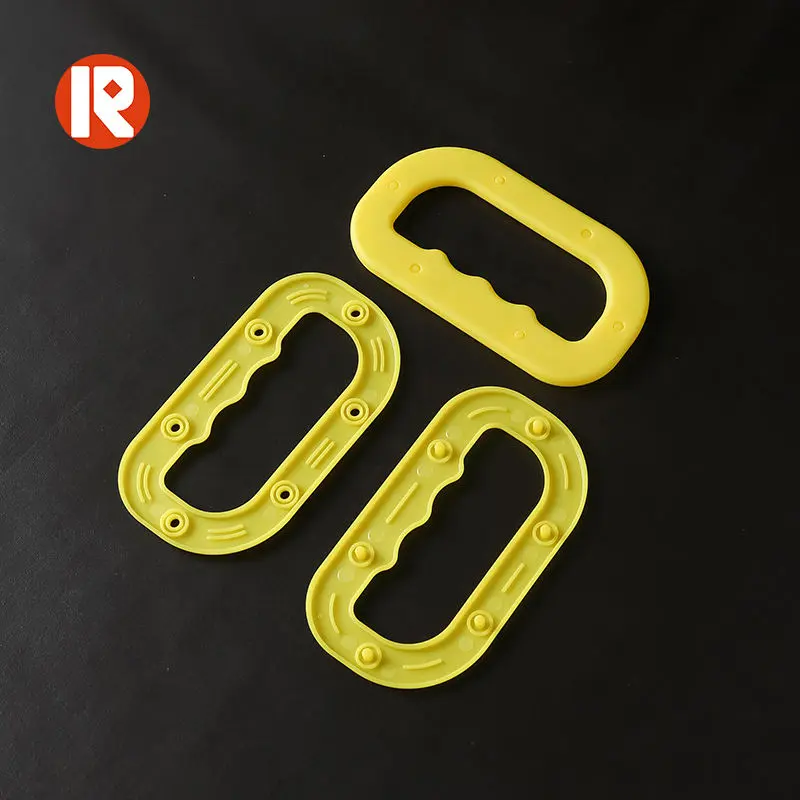
How to Customize a Plastic Handle Based on Rice Bag Requirements
A successful custom project should begin with the packaging rather than the handle itself.
Step 1 – Define the Package Weight and Size
Start with the basic package specifications:
- Filled bag weight
- Bag length and width
- Package thickness
- Expected carrying conditions
These parameters establish the basic load requirements for the handle.
For example, a handle designed for a 5 kg bag should not automatically be used for a 15 kg package without evaluating its strength and attachment structure.
Step 2 – Evaluate the Packaging Film
The handle manufacturer should understand the actual flexible packaging structure.
Important information includes:
- Film material
- Film thickness
- Bag structure
- Sealing structure
- Handle attachment area
This helps determine how lifting forces will be transferred from the handle into the bag.
Step 3 – Define the Grip Requirements
The handle should provide enough space for the user’s hand while remaining practical for the package size.
Design considerations include:
- Grip opening
- Grip width
- Edge treatment
- Handle thickness
- Carrying position
For heavier bags, the design should also consider how pressure is distributed across the user’s hand.
Step 4 – Select the Handle Material
Material selection should be based on the actual application rather than simply choosing the lowest-cost option.
PP may be considered when rigidity and structural strength are important, while PE-based materials can be considered when greater flexibility is required. The final selection should be validated through the specific packaging application.

Step 5 – Design the Attachment Structure
The connection between the handle and the bag is critical.
A good design should consider:
- Connection area
- Load distribution
- Attachment strength
- Film compatibility
- Production method
The objective is to ensure that the handle and bag function as one packaging system.
Step 6 – Prototype and Test
Before mass production, the customized design should be evaluated.
Typical checks can include:
- Load-bearing testing
- Pull testing
- Dimensional inspection
- Attachment reliability
- Repeated carrying tests
Testing helps identify structural problems before they become production or consumer complaints.
Step 7 – Move to Mass Production
After the design has been validated, the project can move into tooling and mass production.
The manufacturer should establish final specifications and quality standards so that the handle remains consistent across production batches.

How to Design Handles for Different Rice Bag Applications
Different package formats require different priorities.
Handles for 5 kg Rice Bags
For 5 kg bags, the design can generally focus on a balance between strength, compact dimensions, and carrying comfort.
The handle should provide enough capacity for the filled package without adding unnecessary material or bulk.
Handles for 10 kg Rice Bags
A 10 kg package places greater demands on the handle and its attachment structure.
The design should focus more heavily on load-bearing performance, connection strength, and comfortable grip geometry.
Handles for Large and Heavy Rice Bags
Large-format bags require a heavy-duty rice bag handle designed around the actual filled weight.
A larger grip area, reinforced structure, and stronger attachment may be appropriate. Load testing becomes particularly important because failure during carrying can damage both the package and the product.
Handles for Premium Rice Packaging
Premium products may place greater emphasis on appearance and consumer experience.
Custom colors, refined grip geometry, and brand-specific dimensions can allow the handle to complement the overall packaging design while still providing practical carrying functionality.
How Sanrun Helps Customize Plastic Handles for Rice Bags
Sanrun provides factory-direct custom rice bag handle manufacturing for rice brands, flour brands, and flexible packaging manufacturers.
Requirement-Based Design
We evaluate package weight, bag dimensions, film structure, handle position, and carrying requirements before developing the solution.
This allows us to design the handle around the customer’s actual packaging rather than simply modifying a standard product.
Mold Development and Manufacturing
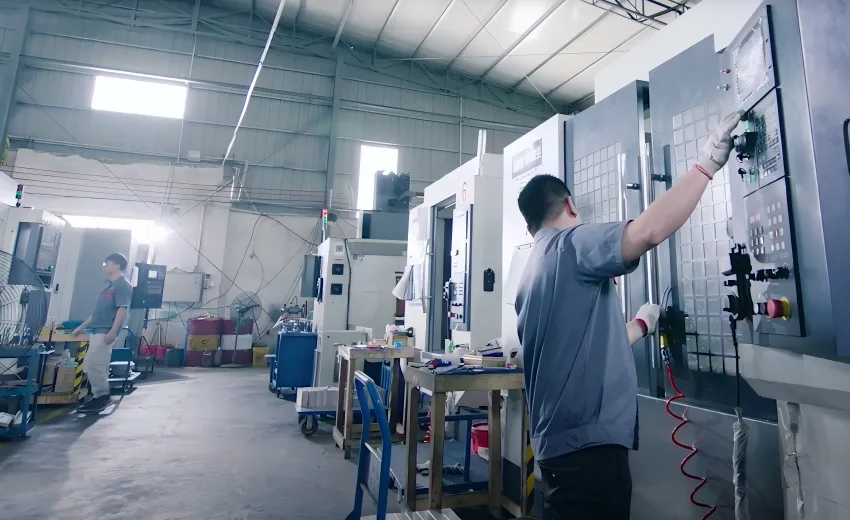
Customized handles often require dedicated tooling to achieve the required dimensions and structure.
Sanrun supports mold development and controlled production to maintain consistent dimensions and reliable performance throughout bulk manufacturing.
Quality and Performance Testing
We inspect key characteristics including:
- Material
- Dimensions
- Strength
- Appearance
- Production consistency
These checks help ensure that customized handles remain consistent from initial samples through mass production.

Factory-Direct OEM and Bulk Supply
Sanrun works directly with rice brands, flour brands, flexible packaging manufacturers, and packaging factories.
As a custom rice bag handle manufacturer, we support OEM development and large-volume production while maintaining direct communication throughout the project.
What Information Should You Send to a Rice Bag Handle Manufacturer?
Providing the right information at the beginning can significantly shorten the development process.
Basic Packaging Information
Provide:
- Product type
- Filled bag weight
- Bag dimensions
- Film material
- Film thickness
Handle Requirements
Specify:
- Desired handle size
- Handle position
- Color
- Grip requirements
- Expected load
Production Requirements
The manufacturer should also understand:
- Attachment method
- Production equipment
- Estimated monthly quantity
- Packaging line requirements
- Target market
Existing Samples or Drawings
If available, provide:
- Existing handle samples
- CAD drawings
- Bag samples
- Packaging artwork
These references give the manufacturer a clearer understanding of the desired result and reduce unnecessary development iterations.
How to Evaluate a Custom Rice Bag Handle Supplier
The lowest quoted price does not necessarily represent the lowest total purchasing cost. For customized components, manufacturing capability directly affects development risk and production consistency.
Manufacturing Capability
Check whether the supplier can handle:
- Custom mold development
- Customized structures
- Dimensional control
- Bulk production
Testing and Quality Control
Ask whether the supplier can provide appropriate testing for:
- Strength
- Dimensions
- Materials
- Appearance
- Production consistency
OEM Communication Capability
A capable supplier should be able to communicate about both the handle and the packaging system.
This is especially important when the buyer is a rice brand working with a separate flexible packaging factory.
Production and Export Capability
For international projects, also evaluate:
- Production capacity
- Lead times
- Packaging for shipment
- Export experience
- Long-term supply stability
A reliable rice bag handle supplier should be able to support the project beyond the initial sample.

Conclusion
Customizing a plastic rice bag handle is not simply a matter of changing its shape or color. The handle needs to work with the package weight, flexible packaging structure, material, grip requirements, attachment method, and production process.
For rice brands and packaging factories, the most reliable approach is to define the packaging requirements first, develop the handle accordingly, test the complete solution, and then move into mass production.
Sanrun provides factory-direct OEM and wholesale plastic rice bag handles, supporting customers from product requirements and mold development through testing and bulk manufacturing.