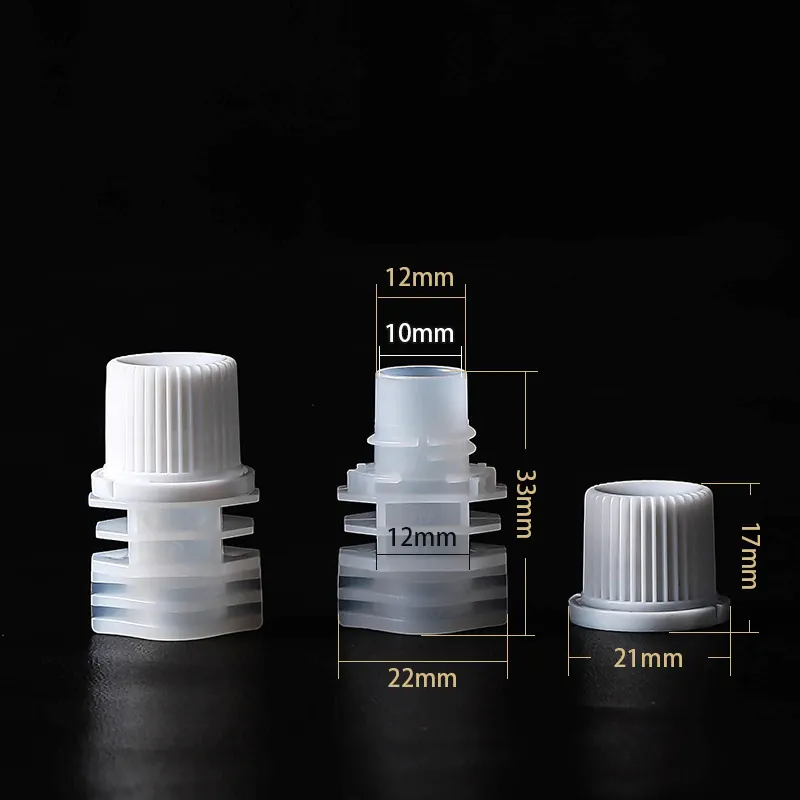







Refill pouches are increasingly used for beverages, household cleaners, personal care products, sauces, concentrates, and other liquid products. Compared with rigid bottles, refill pouches use less packaging material and are easier to store and transport. However, their flexible structure makes the capuchon de bec an important part of the overall packaging system.
The best spout cap for refill pouches depends on more than the pouch itself. Liquid viscosity, pouch size, dispensing requirements, closure frequency, material compatibility, and filling equipment all affect the final selection.
For brands and flexible packaging manufacturers, the goal is to choose a cap that provides the right combination of controlled dispensing, reliable sealing, consumer convenience, and production compatibility.
What Should You Consider Before Choosing a Refill Pouch Spout Cap?
Before comparing different cap designs, buyers should first understand the actual requirements of the refill product.
Liquid Viscosity and Flow Behavior
Viscosity is one of the most important factors affecting spout selection. A water-like liquid flows much more easily than a thick sauce, concentrate, or cosmetic cream.
Thin liquids generally work well with smaller or medium spout openings because they can flow quickly through the opening. A very large spout may make the product difficult to control during dispensing.
Thicker liquids have greater flow resistance. A larger spout opening can reduce this resistance and make the product easier to pour or squeeze out.
Therefore, the spout should be selected according to the actual formulation and flow behavior, rather than simply choosing a standard cap used for the same product category.
Pouch Size and Product Weight
Pouch capacity also affects spout cap selection. A small personal-care refill pouch may place relatively little mechanical stress on its closure, while a large household or food refill pouch can become considerably heavier after filling.
As pouch weight increases, the attachment between the spout and pouch film becomes more important. The cap and spout assembly must withstand handling, transportation, squeezing, and storage without damaging the seal.
For larger refill pouches, buyers should evaluate not only the cap but also the spout-to-film connection and overall pouch structure.
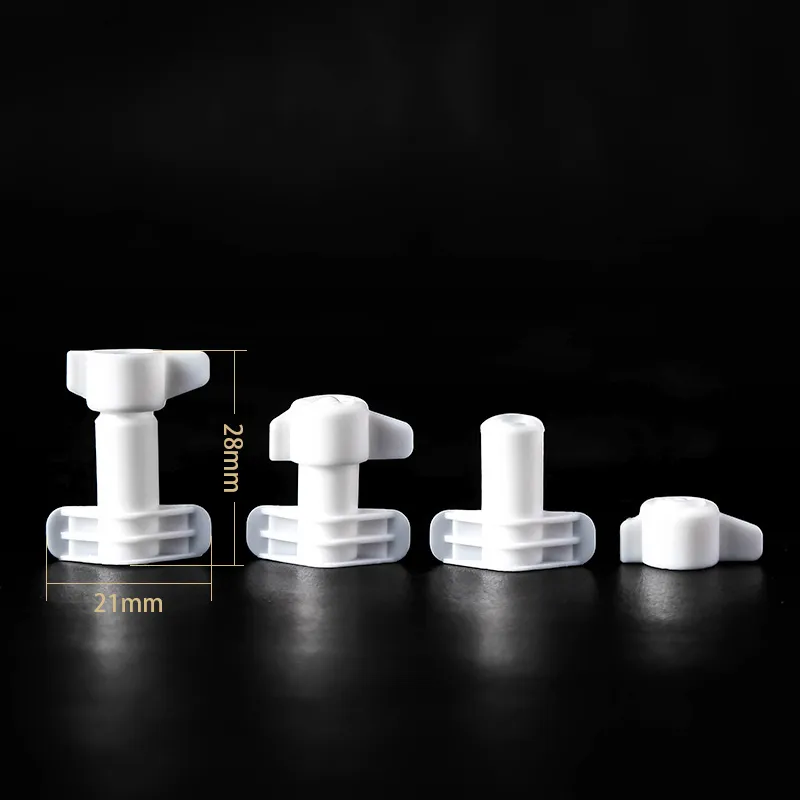
Refill Frequency and Consumer Use
Consider how consumers will use the product.
A single-use refill may only need to be opened once, while a household cleaning or personal-care refill may be opened and closed multiple times. If repeated use is expected, the cap should provide convenient opening and secure resealing.
This makes closure design a practical purchasing consideration rather than simply an aesthetic choice.
Which Spout Cap Type Is Better for Refill Pouches?
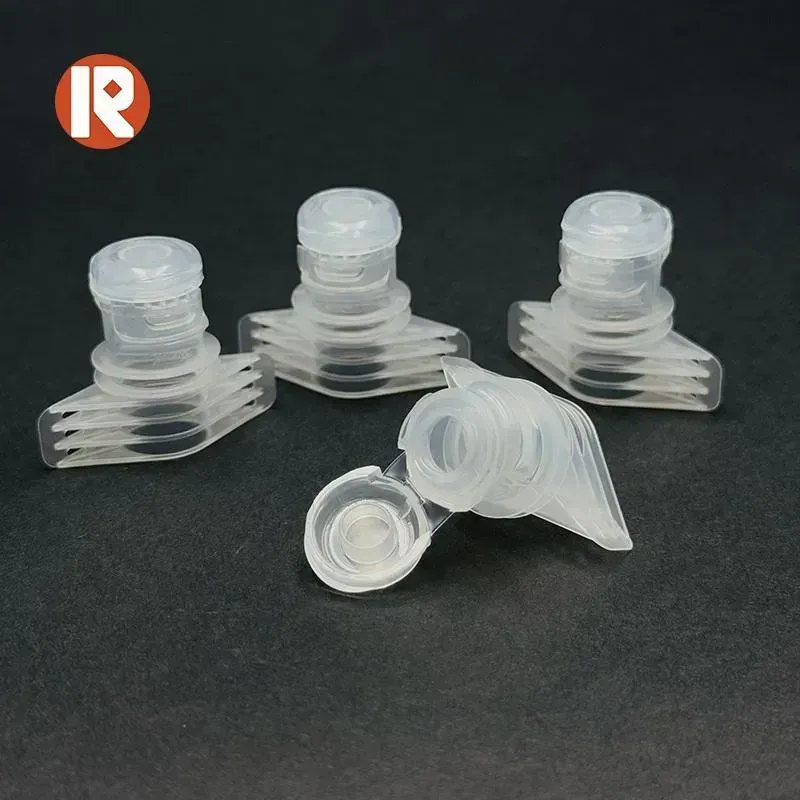
There is no universal best cap type. Different closure designs serve different refill applications.
Screw Caps – Best for Repeated Use
Screw caps are a practical choice when consumers need to open and close the pouch repeatedly.
The threaded structure allows the cap to be removed and reinstalled, making it suitable for products that are consumed gradually. This is particularly useful for household liquids, personal-care products, sauces, and other refill products stored after opening.
For multi-use refill pouches, buyers should pay attention to thread engagement, sealing structure, cap torque, and dimensional consistency. These factors affect whether the cap can repeatedly seal the pouch without excessive leakage or loosening.
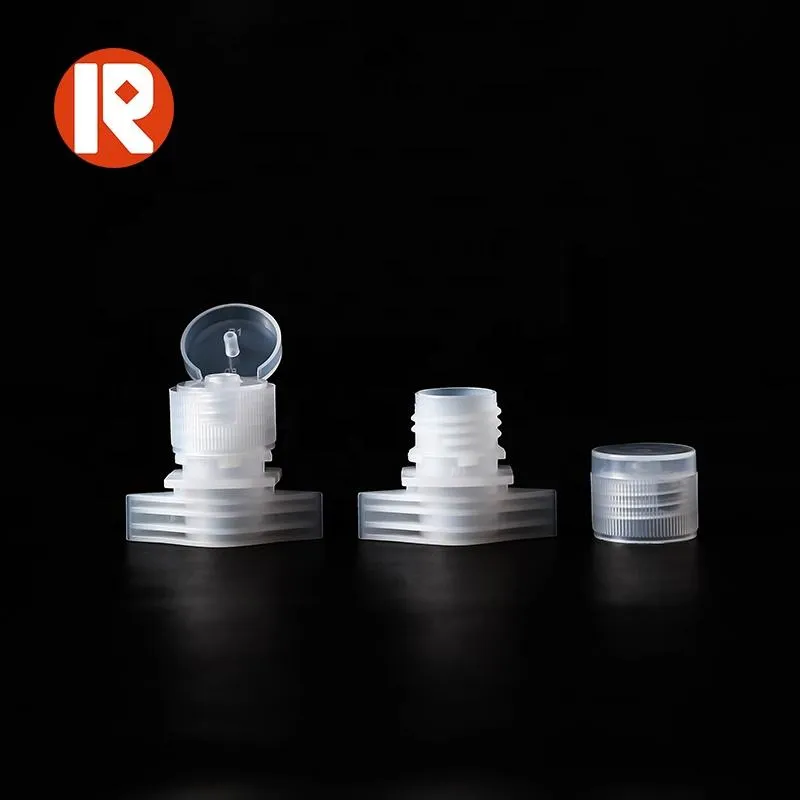
Flip-Top Caps – Best for Convenient Dispensing
Flip-top caps are designed for quick and convenient access. Consumers can open the closure without completely removing the cap, which can be useful when the product is dispensed frequently.
They are particularly suitable when one-handed operation or controlled dispensing is important.
For products with thin or medium viscosity, a properly sized flip-top spout can provide a balance between dispensing speed and flow control.
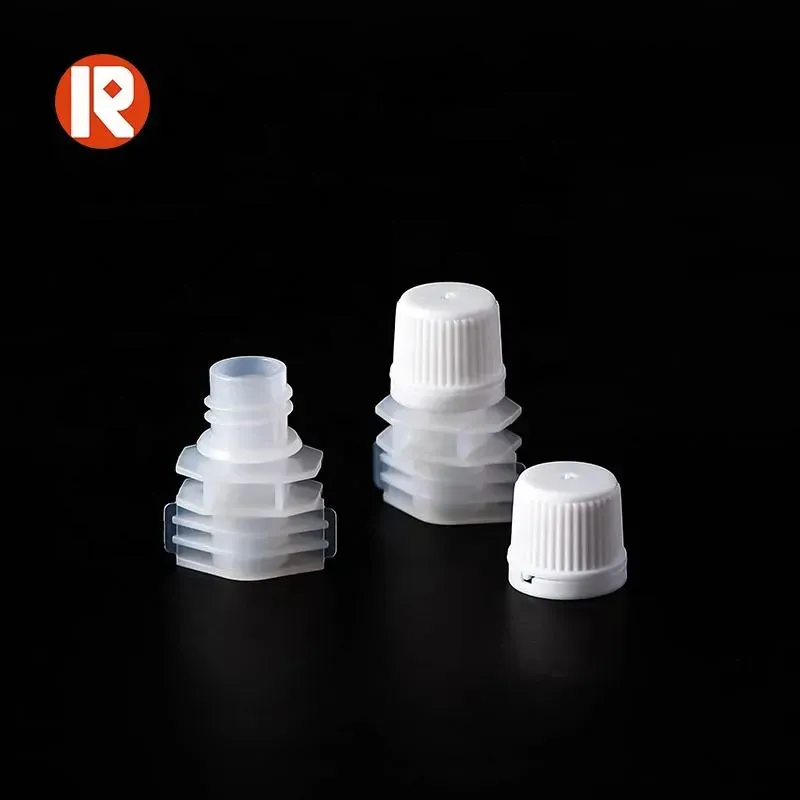
Tamper-Evident Caps – Best for Product Protection
For retail refill pouches, tamper-evident designs can provide visible evidence that the package has been opened.
This can be important for food, beverages, personal-care products, and other consumer products where package integrity matters.
The tamper-evident feature should be considered together with the cap’s sealing structure and pouch attachment. A tamper-evident mechanism does not replace proper leak-proof design.
How to Choose Between Them
A simple selection framework is:
- Repeated opening: screw cap
- Fast and convenient dispensing: flip-top cap
- Retail product protection: tamper-evident design
- Thin liquids: smaller or medium opening
- Thick liquids: larger opening
The final choice should also account for the pouch format, filling equipment, target market, and consumer usage pattern.
What Spout Diameter Is Best for Refill Pouches?
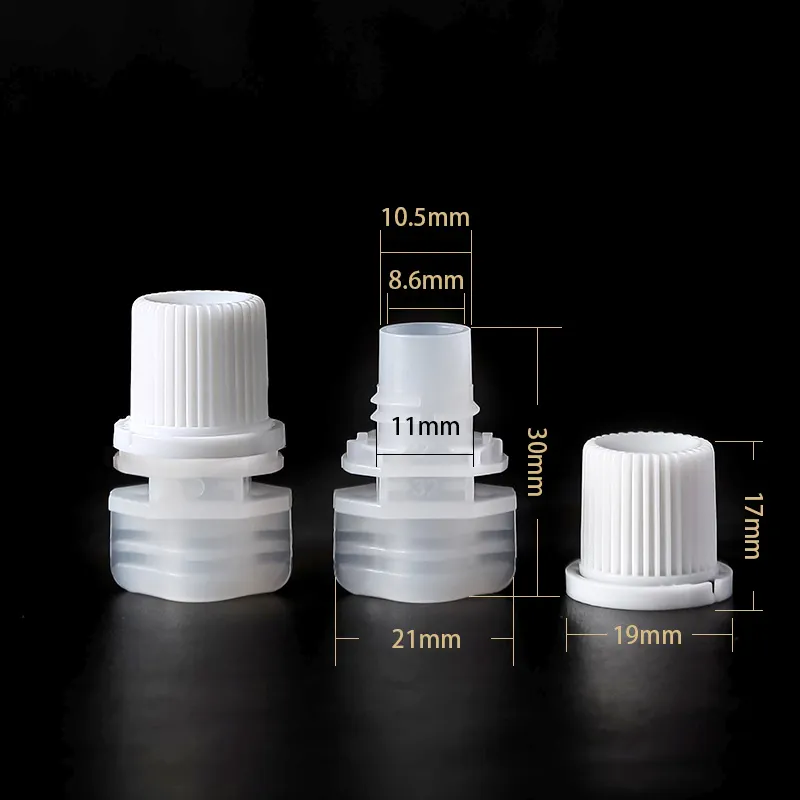
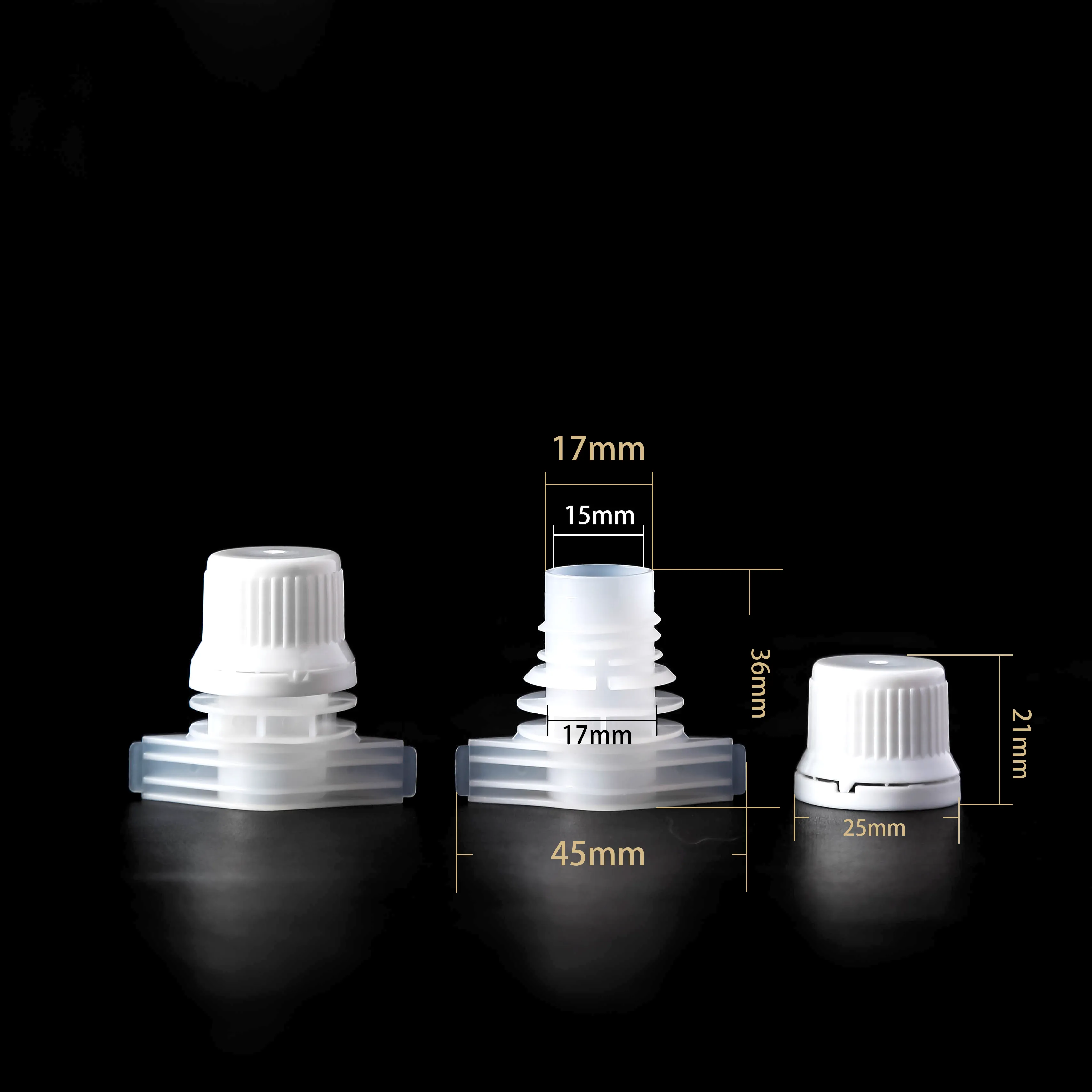
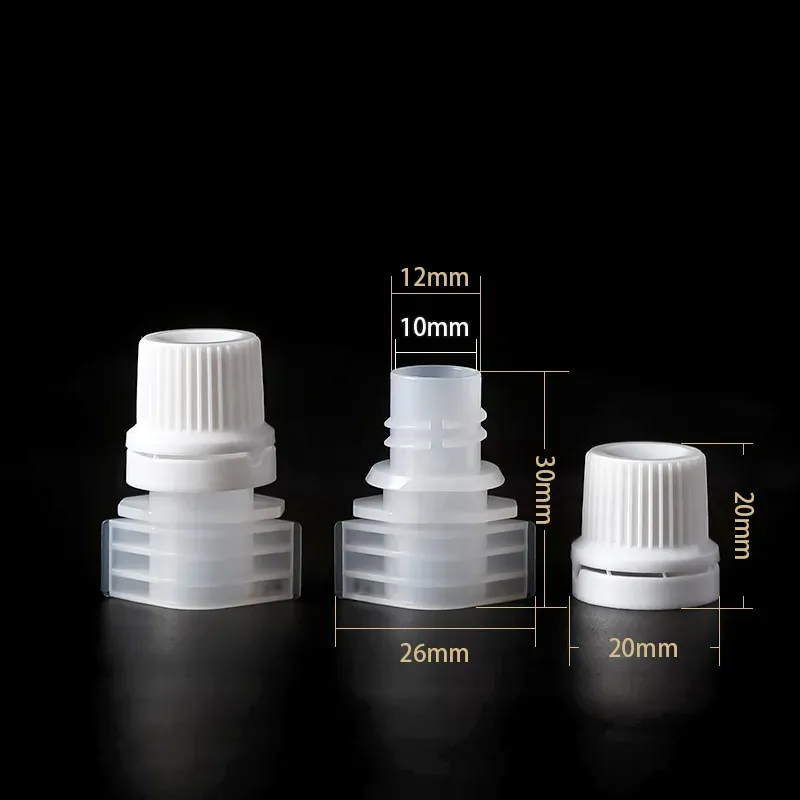
Spout diameter directly influences flow rate and dispensing control. The right size depends primarily on the liquid and intended usage.
Small Spout: Around 8–10 mm
A small spout is generally suitable for thin liquids where controlled dispensing is important.
It can work well for products such as certain beverages, liquid personal-care products, and other low-viscosity formulations.
A smaller opening limits the amount of liquid passing through the spout at one time, which can make dispensing easier to control.
Medium Spout: Around 12–16 mm
A medium spout provides a balance between flow speed and control.
It can be suitable for household liquids, personal-care products, sauces, and medium-viscosity formulations. This range is also practical when the buyer wants one versatile spout configuration for several similar applications.
However, the exact diameter should still be validated using the actual product because two liquids within the same product category can have significantly different flow characteristics.
Large Spout: Around 18–25 mm
Large spouts are more appropriate when the product is thick or when faster pouring is required.
A larger opening reduces flow resistance, making it easier for products such as thick sauces, concentrates, and viscous household or personal-care formulations to pass through.
For heavy refill pouches, the larger spout should also be evaluated for mechanical strength and pouch attachment performance.
Why Spout Diameter Affects Dispensing Performance
Spout diameter changes the relationship between the liquid and the opening. When viscosity is high, a narrow opening can restrict flow and make dispensing difficult. When viscosity is low, an excessively large opening can result in uncontrolled flow.
Therefore, diameter selection should balance flow resistance, dispensing speed, product control, and consumer experience.
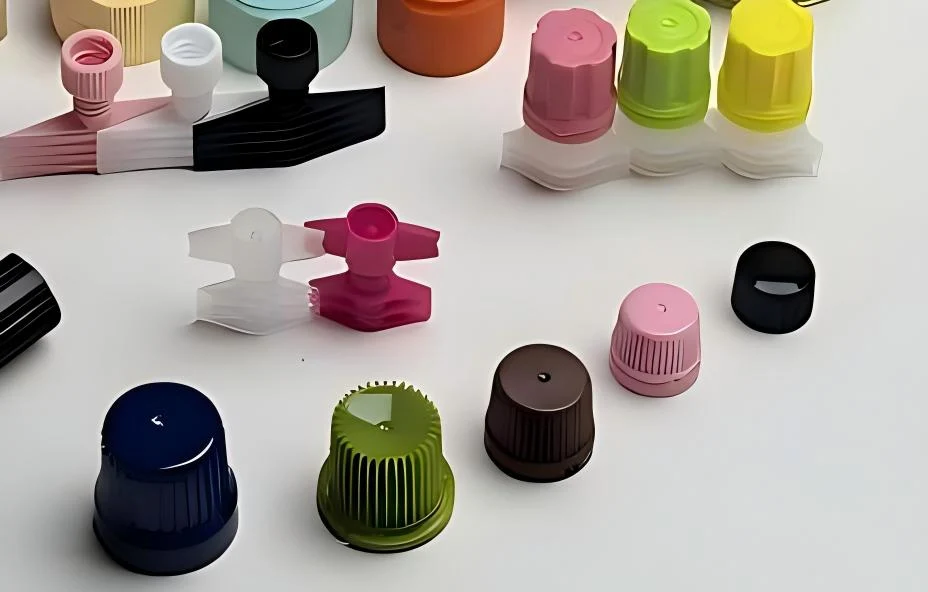
What Material Is Best for Refill Pouch Spout Caps?
Material selection affects rigidity, flexibility, chemical compatibility, processing, and the overall feel of the closure.
PP Spout Caps
Polypropylene (PP) is widely used for plastic packaging closures because it provides good rigidity and can support precise cap structures.
PP spout caps are suitable for many food, beverage, household, and personal-care applications. They can also be produced in different colors and configurations for branded packaging.
For many refill pouch applications, PP provides a practical balance between mechanical performance and manufacturing flexibility.
PE Spout Caps
Polyethylene (PE) provides a different combination of flexibility and toughness.
PE can be considered when the application benefits from a somewhat softer or more flexible plastic component. The exact PE grade should be selected according to the product, processing conditions, and required mechanical performance.
LDPE vs. HDPE
Within polyethylene materials, LDPE and HDPE offer different characteristics.
LDPE is relatively soft and flexible, which can be useful when flexibility is important.
PEHD provides greater rigidity and structural strength, making it suitable for applications where the spout or closure needs stronger mechanical performance.
The choice between PP, LDPE, and HDPE should therefore be based on product compatibility, pouch structure, mechanical requirements, and production conditions, rather than material preference alone.

Spout Cap Compatibility With Refill Pouch Packaging
A cap cannot be evaluated independently from the pouch. The spout, film, sealing process, filling equipment, and closure must work as one packaging system.
Pouch Film and Spout Compatibility
The pouch film structure determines how the spout is attached and sealed.
The pouch film and spout need to work together as a complete sealing system. The film sealing layer must be compatible with the spout material, so they can form a strong bond under the required heat-sealing conditions.
At the same time, the spout’s attachment area, sealing temperature, and pressure work together to determine how evenly the film bonds to the spout. A suitable combination helps create sufficient attachment strength and prevent leakage.
Therefore, buyers should evaluate the complete chain of film material → spout material → sealing conditions → attachment strength → leak resistance rather than selecting the spout separately from the pouch film.
Filling and Capping Process Compatibility
Production equipment is another important consideration.
The relationship can be understood as a production chain:
Spout dimensions → pouch/spout attachment → filling process → cap feeding → cap application → torque → final sealing
Each stage affects the next. A spout that is compatible with the pouch film may still cause production problems if its dimensions do not match the filling line. Likewise, a cap that fits the spout mechanically may not perform consistently if the required application torque is outside the machine’s operating range.
For automated production, dimensional consistency becomes particularly important. Small variations in thread dimensions, cap geometry, or spout position can affect cap feeding, application, and rejection rates.
A fournisseur de bouchons pour becs verseurs should therefore understand not only the cap itself but also how it will be integrated into the customer’s packaging line.
Transportation and Leak Prevention
Refill pouches may experience compression, vibration, stacking, temperature changes, and repeated handling during transportation.
The closure must maintain its sealing performance under these conditions.
Leak prevention depends on several elements working together, including thread design, sealing structures, dimensional control, cap torque, spout attachment, and pouch construction.
For commercial production, leak testing and compatibility testing with the actual pouch are more useful than evaluating the cap only by visual appearance.
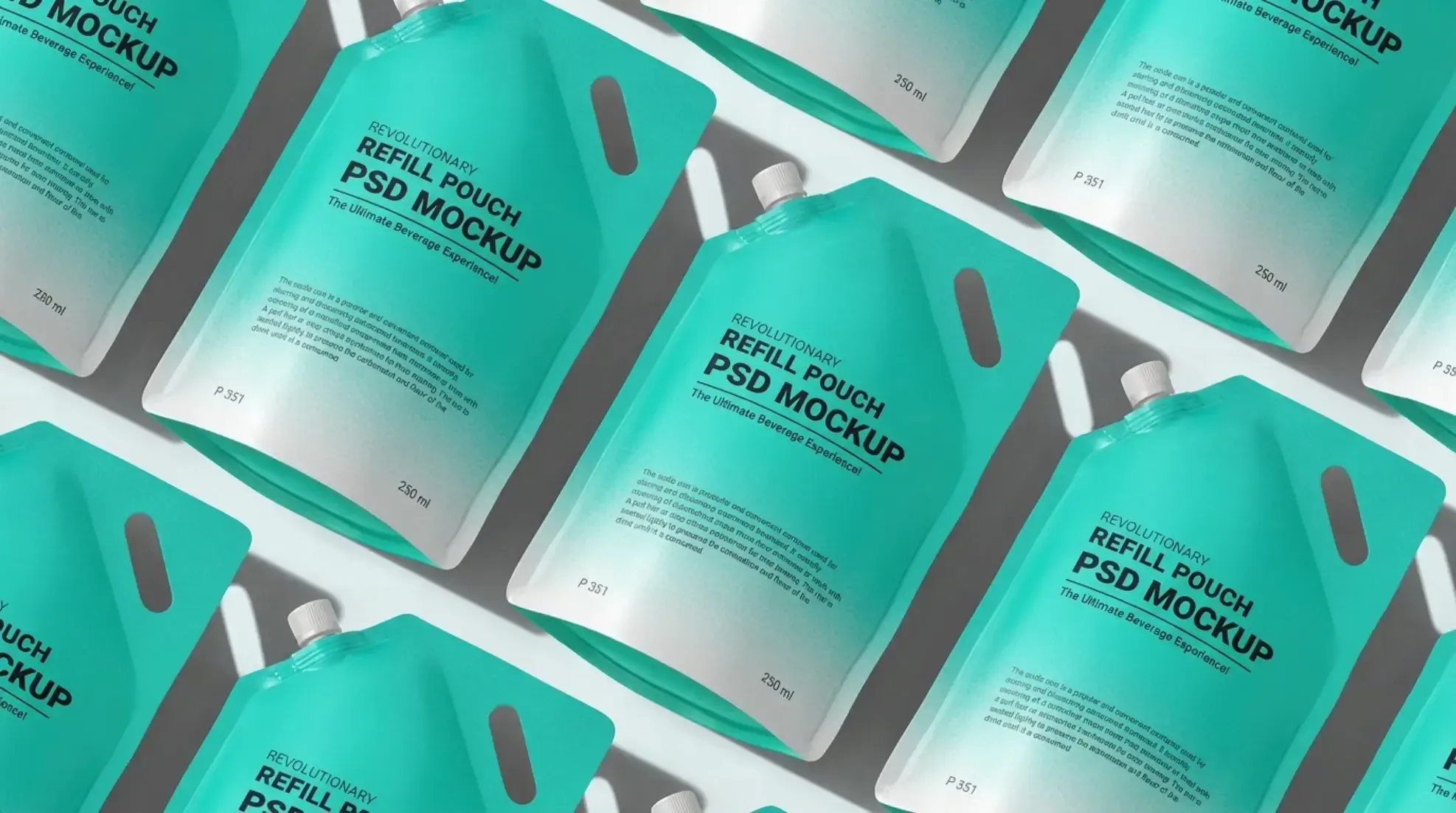
How Sanrun Helps You Choose the Right Refill Pouch Spout Cap
Sanrun est une entreprise qui vend directement depuis l'usine fabricant de bouchons à bec specializing in plastic spout caps for flexible packaging applications. Rather than selecting a standard cap only by size, Sanrun can evaluate the product and packaging requirements together.
Application-Based Recommendation
Sanrun can help evaluate key factors such as liquid viscosity, pouch size, filled weight, dispensing requirements, closure frequency, cap type, and spout diameter.
This approach helps brands and flexible packaging manufacturers narrow down suitable cap structures before moving into mass production.
Custom Spout Cap Development
When standard configurations do not fully match the application, Sanrun can support custom development.
Customization can include:
- Diamètre du bec verseur
- Cap structure
- Conception des fils
- Choix des matériaux
- Couleur
- Logo and branding
With in-house mold development capabilities, a fabricant de bouchons à bec sur mesure can also modify the product geometry when the packaging application requires a more specialized solution.
Flexible Packaging Compatibility
Refill pouch projects often involve several parties, including the brand owner, flexible packaging factory, filling facility, and cap manufacturer.
Sanrun can communicate with both brands and packaging factories to help match the cap with pouch materials, sealing methods, filling equipment, and production requirements.
This coordination is important because the best cap design is ultimately determined by how the complete packaging system performs.
Factory-Direct Wholesale Supply
For brands, importers, distributors, and packaging companies purchasing at scale, Sanrun provides factory-direct production for wholesale and bulk requirements.
En tant que Fournisseur en gros de bouchons à bec, Sanrun supports direct technical communication, customization, quality control, and large-volume production without relying solely on intermediary sourcing channels.
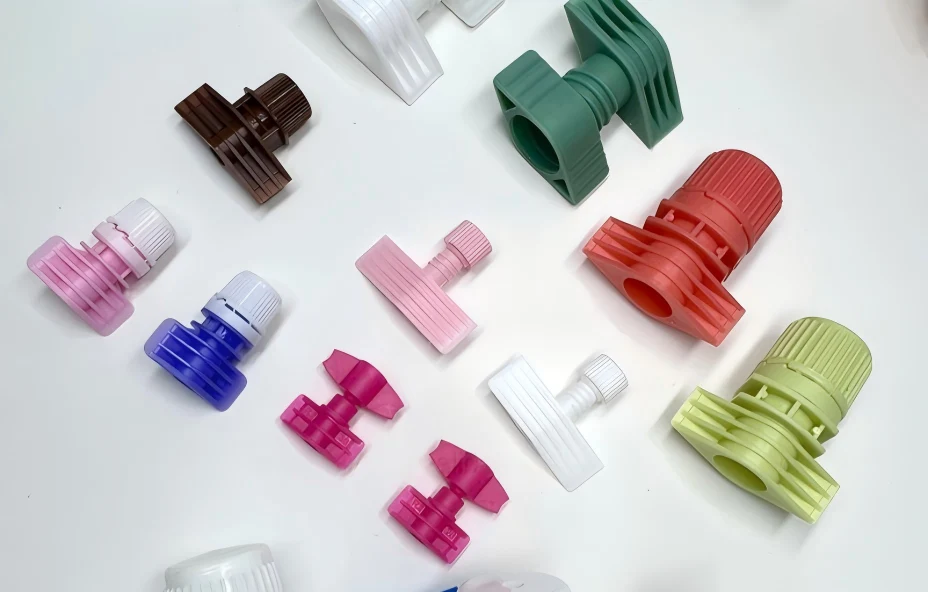


Conclusion
Choosing the right spout cap for a refill pouch starts with the product rather than the cap.
The selection process can be simplified into:
Liquid → viscosity → spout diameter → cap type → material → pouch compatibility → filling process
Thin liquids may require smaller or medium openings for better flow control, while thick liquids generally benefit from larger spouts. Screw caps are practical for repeated use, flip-top designs prioritize dispensing convenience, and tamper-evident closures can provide additional retail protection.
Material selection and pouch compatibility are equally important. PP, PE, LDPE, and HDPE offer different combinations of rigidity, flexibility, and mechanical performance, while the spout must also work with the pouch film, sealing process, and filling equipment.
For brands and flexible packaging manufacturers handling bulk refill pouch production, working directly with an experienced fabricant de bouchons à bec can make it easier to evaluate specifications, develop custom solutions, test compatibility, and move efficiently into mass production.