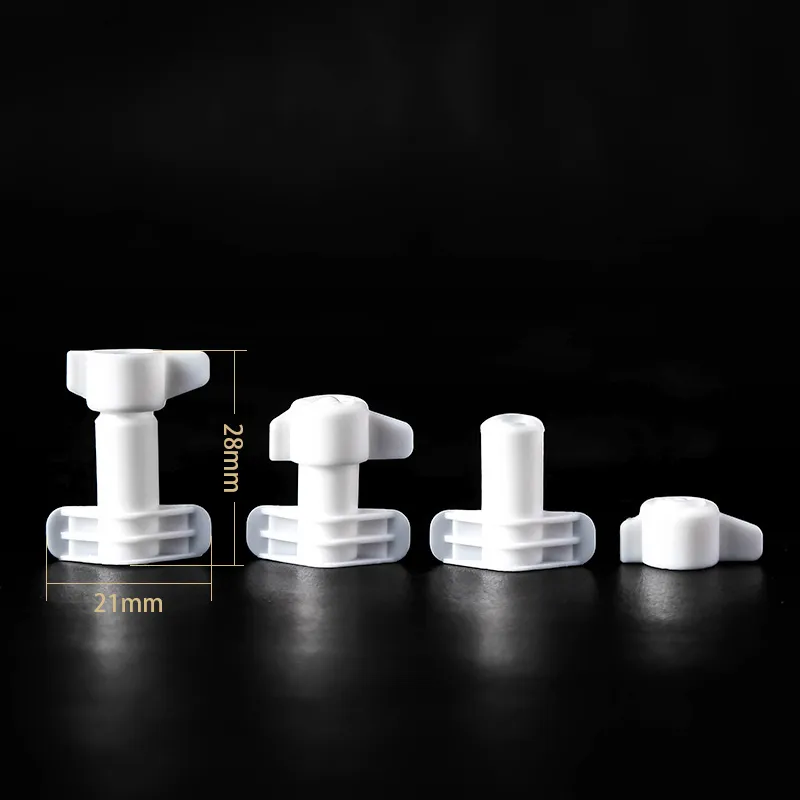



Coffee valves allow carbon dioxide released by freshly roasted coffee to escape from packaging while limiting oxygen from entering. Their performance depends not only on valve design but also on the materials used in different components. Polyethylene (PE), polypropylene (PP), and silicone-related materials may all appear in valve manufacturing, but they serve different functions.
For coffee roasters, packaging manufacturers, and wholesale buyers, understanding these differences helps when evaluating valve compatibility, sealing performance, food-contact requirements, and packaging sustainability.
What Materials Are Used in a Coffee Degassing Valve?
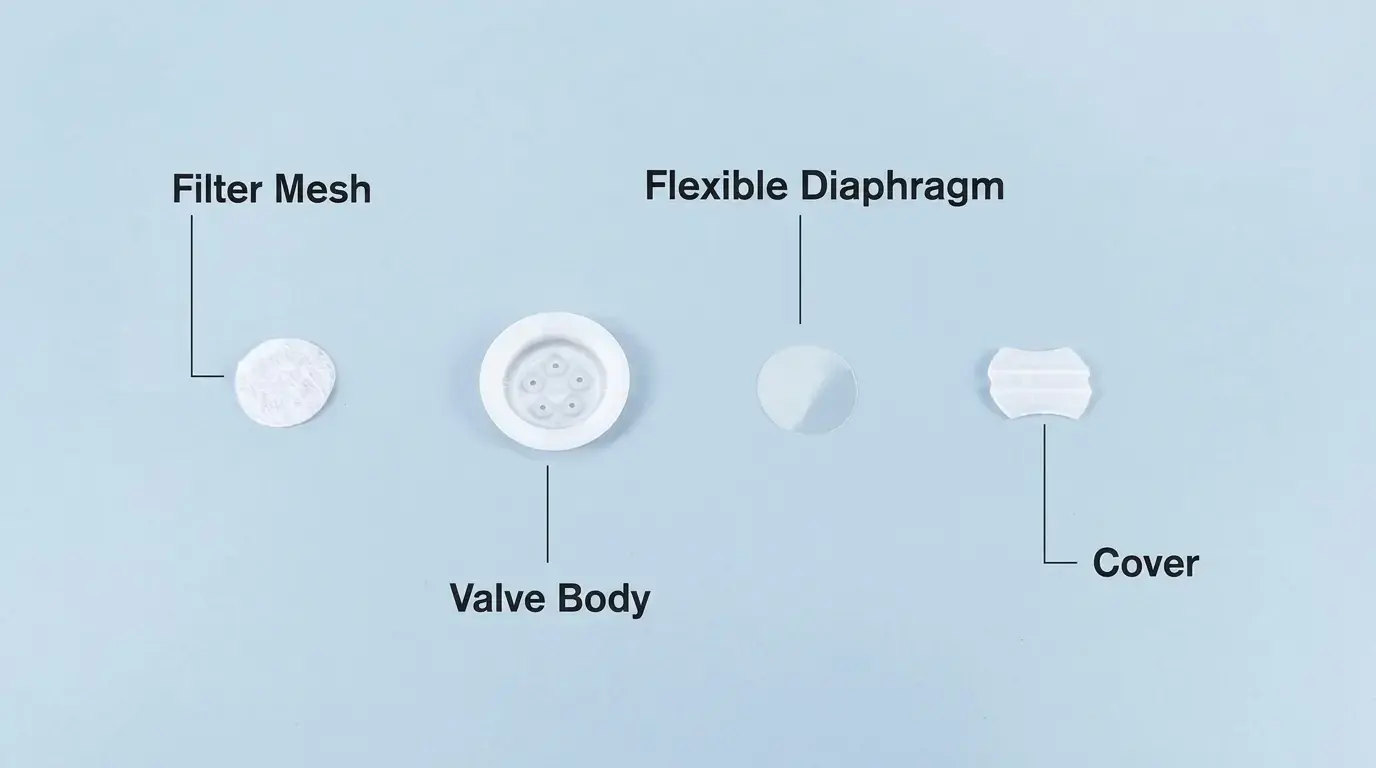
A coffee degassing valve is an assembly of several components. Different materials may be selected for the valve body, sealing element, and other parts according to the design.
| Component | Possible material | Main function |
|---|---|---|
| Valve body or housing | PE or PP | Holds the valve structure and provides mechanical support |
| Sealing disc or membrane | Silicone rubber or other elastomers | Controls gas release and helps prevent outside air from entering |
| Sealing medium | Silicone oil in some designs | Helps create a seal between moving or contacting components |
| Filter layer | Paper or polymer-based material | Helps prevent coffee particles from interfering with valve operation |
This is a general overview, not a universal construction specification. Not every coffee packaging valve uses all these materials. Some designs use a flexible membrane, while others rely on a different sealing mechanism.
Buyers should therefore request a component-level material specification instead of relying on a single material label for the entire valve.
PE (Polyethylene) in Coffee Degassing Valves
Polyethylene is commonly used in flexible packaging and can also serve as a material for coffee valve bodies.
Why Is PE Used?
PE offers several properties relevant to coffee packaging:
- Flexibility: It can accommodate different packaging structures and handling conditions.
- Chemical resistance: It resists many common substances, supporting its use in packaging applications.
- Heat-sealing compatibility: PE components can be suitable for packaging systems that use PE-based inner sealing layers, depending on the valve design and sealing process.
- Established packaging use: PE is widely used in flexible packaging, making it familiar to packaging converters and manufacturers.
The compatibility between the valve and the coffee bag is particularly important. A PE valve may be designed to bond with a PE inner layer, but buyers should still verify the recommended sealing temperature, pressure, dwell time, and applicable film structure.
Is a PE Coffee Valve Recyclable?
PE is widely used in recyclable packaging structures, but that does not automatically make every PE coffee valve recyclable.
A valve may contain multiple materials, including an elastomeric membrane, adhesive, filter, or sealing medium. These components can affect the recyclability of the complete assembly.
If recyclability is a purchasing requirement, ask whether the entire valve is compatible with the intended recycling stream—not simply whether its main body is made from PE.
PP (Polypropylene) in Coffee Valve Manufacturing
Polypropylene is another thermoplastic used in packaging components. It may be considered for valve bodies or structural parts when a design requires different mechanical or thermal properties from PE.
Key Properties of PP
PP is generally known for:
- Rigidity: It can provide a relatively stiff structure for components that need to maintain their shape.
- Dimensional stability: It can be suitable for parts requiring consistent geometry.
- Heat resistance: It generally tolerates higher temperatures than many common PE grades, although actual performance depends on the material grade and processing conditions.
These properties may make PP worth evaluating for certain coffee valve designs. However, material selection should be based on the complete valve structure and packaging process rather than a general assumption that one polymer is better.
When Should Buyers Consider PP Coffee Degassing Valves?
PP may be considered when a valve design requires a more rigid housing or specific dimensional characteristics. Buyers should evaluate whether the selected PP grade is compatible with the valve’s sealing method, the coffee bag’s inner layer, and the production equipment.
PP should not be treated as a direct replacement for PE without testing. Differences in flexibility, heat-sealing behavior, and component design can affect the finished packaging system.
Silicone in Coffee Degassing Valves: Membranes and Sealing
The term “silicone” can refer to different materials or substances in valve construction. Two important distinctions are silicone rubber and silicone oil.
Silicone Rubber as a Sealing Membrane
Silicone rubber is an elastomer that may be used as a flexible membrane or sealing element in certain valve designs.
Its elasticity allows it to deform under pressure and return toward its original shape. In a one-way degassing valve, the sealing element must respond to internal gas pressure while helping prevent outside air from entering after the pressure is released.
The suitability of silicone rubber depends on its formulation, hardness, dimensions, and compatibility with the other valve components. Buyers should request the specific material grade and relevant technical documentation rather than relying on the general term “silicone.”
Silicone Oil as a Sealing Medium
Silicone oil is not the same material as silicone rubber. In some valve designs, it acts as a sealing medium between components and helps control the passage of gas.
A valve that uses silicone oil does not necessarily use a silicone rubber membrane. Some designs use other elastomers or different membrane structures alongside silicone oil.
This distinction matters when comparing supplier specifications. A description such as “PE + silicone” does not clearly identify which component contains silicone or whether it refers to silicone rubber or silicone oil.
Buyers should ask for a component-level explanation before confirming material requirements.
PE vs. PP vs. Silicone: Which Material Is Suitable for Each Application?
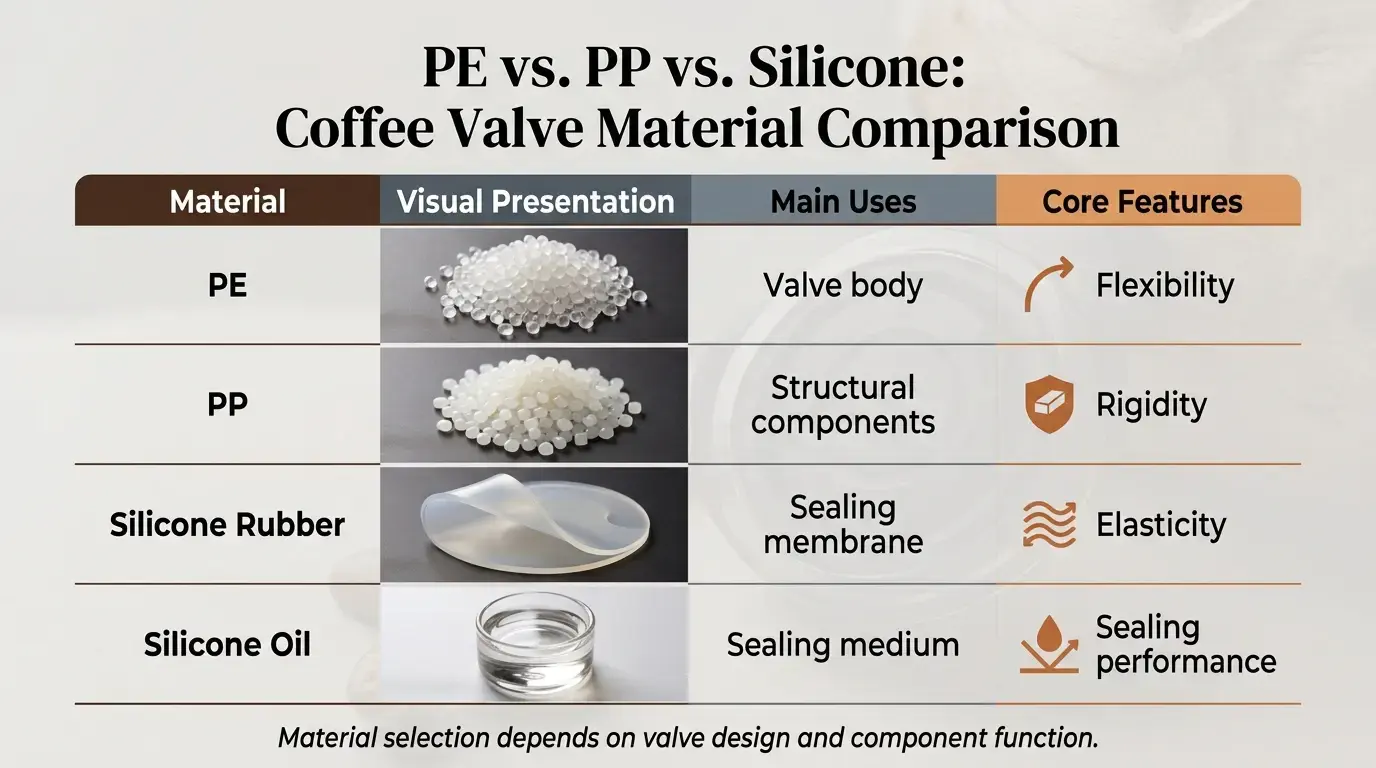
PE, PP, and silicone should not be compared as if they were interchangeable options for the same valve component. PE and PP are thermoplastics that may be used for structural parts, while silicone rubber and silicone oil serve different sealing-related functions.
| Material | Typical role | Main consideration | Buyer evaluation point |
|---|---|---|---|
| PE | Valve body or housing | Flexibility and packaging compatibility | Confirm compatibility with the bag’s inner sealing layer |
| PP | Valve body or structural component | Rigidity and dimensional stability | Verify sealing method and production compatibility |
| Silicone rubber | Membrane or sealing element | Elasticity and sealing behavior | Confirm grade, hardness, and component design |
| Silicone oil | Sealing medium in some designs | Sealing mechanism and consistency | Confirm whether the valve design uses it and how it is specified |
The most suitable material depends on the valve structure, coffee bag material, sealing process, and performance requirements. A material comparison alone cannot establish whether a complete valve will work reliably in a specific packaging application.
What Should Buyers Verify When Sourcing Coffee Valve Materials?
Before placing a bulk order, buyers should confirm the following points with the manufacturer or supplier.
- Material composition by component: Request a specification identifying the material used for the body, membrane, filter, adhesive, and sealing medium where applicable.
- Packaging compatibility: Confirm that the valve is suitable for the bag’s inner film and sealing process. Request recommended sealing parameters and conduct sample testing on the actual packaging structure.
- Food-contact documentation: Ask for relevant declarations, test reports, or compliance documents for the exact valve configuration and the destination market. Do not assume that a material’s general use in packaging proves compliance of the finished valve.
- Functional consistency: Evaluate opening pressure, resealing behavior, leakage performance, and consistency across samples and production batches.
- Recyclability claims: If the packaging is marketed as recyclable, assess the complete valve assembly together with the bag structure and the recycling system in the target market.
For bulk procurement, these checks should be completed before approving the production specification. A material name alone is not enough to establish suitability.
Conclusion
PE, PP, and silicone-related materials serve different roles in coffee degassing valve construction. Buyers should evaluate the material of each component, its compatibility with the packaging structure, and the performance of the complete valve. Clear specifications, relevant compliance documents, and sample testing provide a more reliable basis for bulk purchasing than material labels alone.
About Sanrun
Sanrun supplies wholesale coffee degassing valves for coffee packaging applications, helping buyers evaluate valve specifications and material configurations for their packaging requirements. Whether you are sourcing PE-based valve designs, reviewing silicone-related sealing components, or planning bulk orders, it is important to confirm the material composition and compatibility of each component before production.
Sanrun offers OEM/ODM coffee degassing valve options and sample support, allowing wholesalers, packaging suppliers, and coffee brands to assess product suitability before placing larger orders.
Contact Sanrun to discuss your coffee valve requirements and explore suitable options for your packaging projects.
FAQs About Coffee Valve Materials
What material is commonly used for coffee degassing valve bodies?
PE is used in some coffee valve designs because of its packaging compatibility and flexibility. PP may also be considered for structural components where greater rigidity is required. The actual material depends on the valve design.
Is PE or PP better for coffee packaging valves?
Neither is universally better. PE may suit designs requiring flexibility and compatibility with PE-based packaging layers, while PP may be considered when a more rigid structure is needed. The finished valve must be tested with the intended bag material and sealing process.
Is silicone rubber the same as silicone oil?
No. Silicone rubber is an elastomer that may function as a membrane or sealing element. Silicone oil is a liquid sealing medium used in some valve designs. They serve different purposes and should be identified separately in technical specifications.
Are PE coffee degassing valves recyclable?
Not necessarily. The recyclability of a complete valve depends on all its components and the recycling system available in the target market. A PE body alone does not establish that the full valve assembly is recyclable.
How can buyers verify whether a coffee valve is suitable for food packaging?
Request material specifications and relevant food-contact documentation for the exact valve configuration. Confirm that the documents apply to the intended market and conduct packaging and functional tests before bulk production.