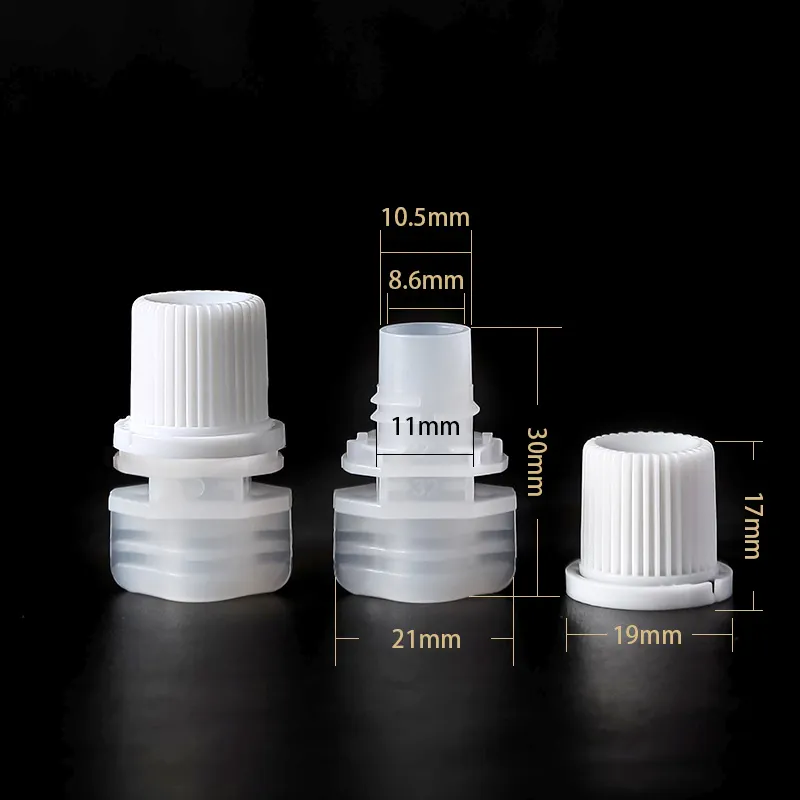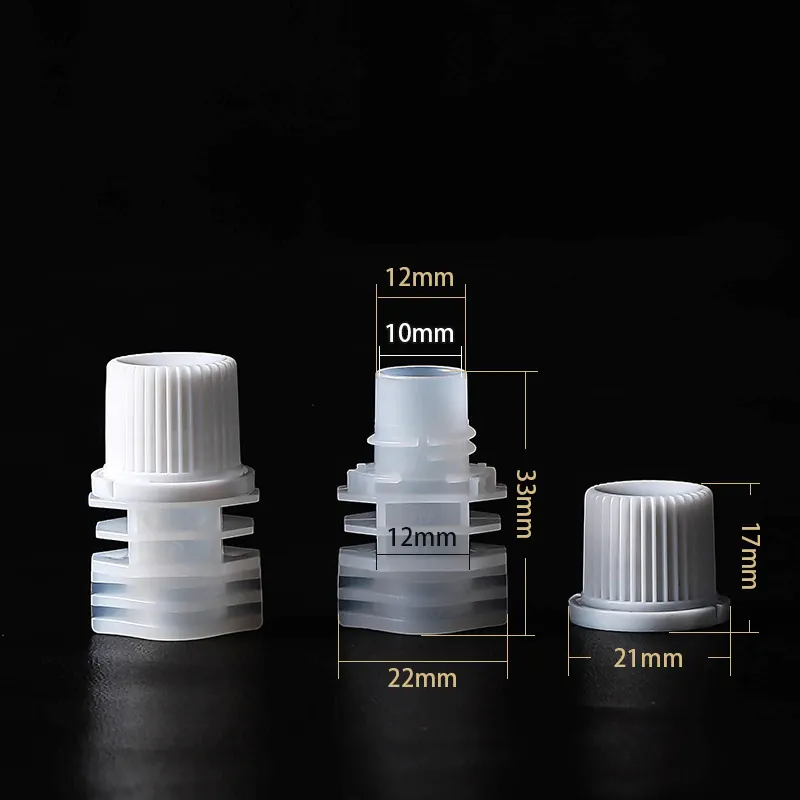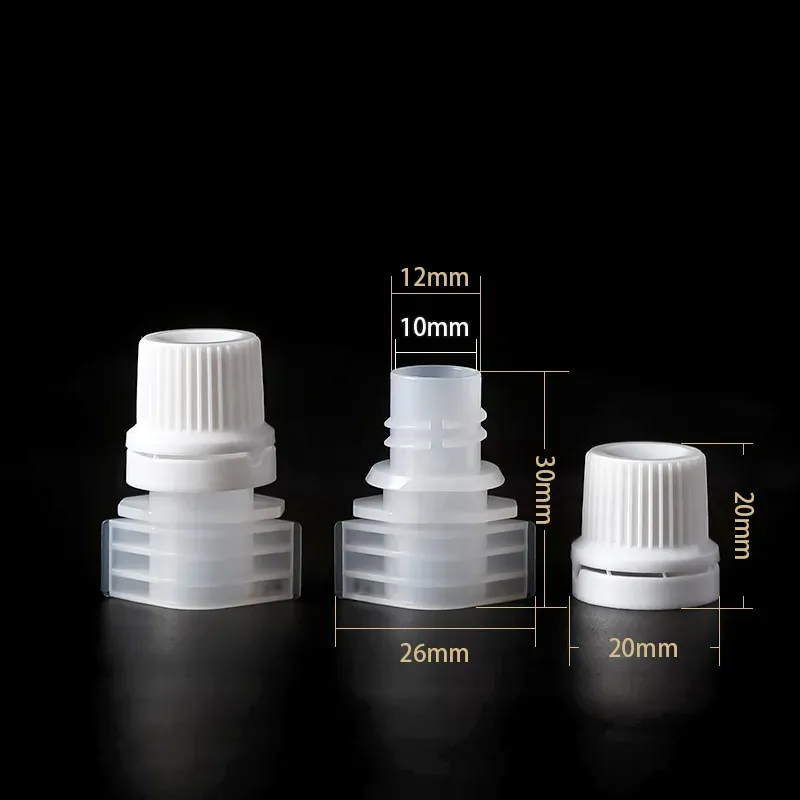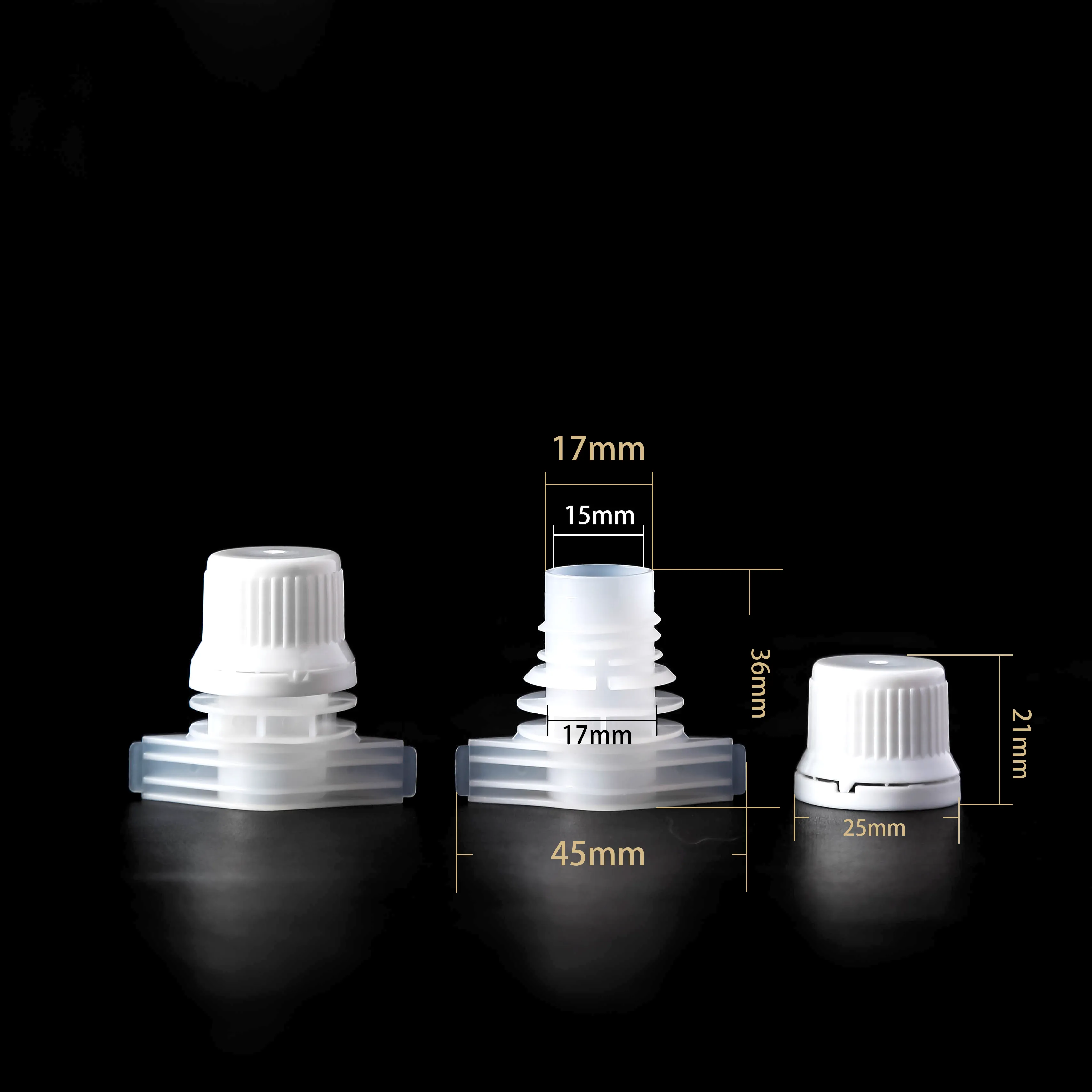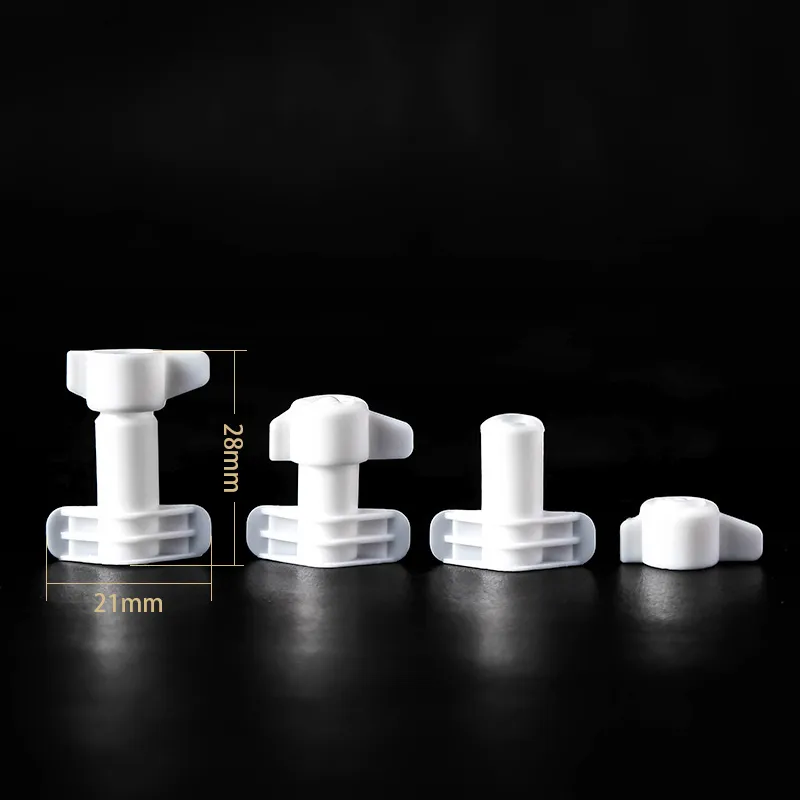







A spout cap is more than a plastic closure with an opening. Its cap, spout, thread, flange, and bore each serve a different function, and their dimensions determine whether the closure works with a specific bottle, pouch, or other package.
This is particularly important when comparing a plastic cap spout or specifying cap spout plastic components. A nominal size such as 20 mm does not necessarily describe the dispensing opening. Buyers need to distinguish the closure or neck dimension from the bore size and thread specification.
What Are the Main Parts of a Spout Cap?
A typical spout cap assembly can be understood through several key components.
Cap
The cap is the closure component that covers the dispensing opening. Depending on the design, it may be a screw cap, flip-top cap, or another closure structure.
Its dimensions and closure mechanism must correspond to the spout or container neck.
Spout
The spout provides the passage through which the packaged product is dispensed. Its external structure connects with the cap, while its internal opening determines the available flow passage.
Thread
Threads allow a screw cap to engage with the corresponding threaded neck. Thread compatibility depends on more than simply measuring the outside diameter.
Packaging specifications commonly identify closures using formats such as 20/410, where the numbers distinguish the nominal neck diameter and thread specification.
Flange and Sealing Area
The flange or sealing area provides a structural interface between the closure and the packaging component. Its exact function and geometry depend on the specific spout design.
For custom closures, flange dimensions need to correspond to the mating bottle, pouch, or other packaging structure.
Bore or Orifice
The bore, or dispensing orifice, is the opening through which the product passes.
This dimension should be considered separately from the nominal cap or neck diameter because the two measurements serve different purposes.

What Does “XX mm” Mean on a Spout Cap?
The term ” XX mm ” on caps can be misleading because the stated millimeter measurement does not always represent the dispensing opening.
Nominal Neck or Closure Diameter
In many packaging specifications, the nominal millimeter dimension identifies the neck or closure system.
For example, a commercial 20/410 spout cap specification identifies a 20 mm neck diameter そして 410 thread, while separately specifying a 7.6 mm orifice.
Therefore:
20 mm closure size ≠ 20 mm dispensing bore
Bore or Orifice Diameter
The bore is the actual opening through which the product exits.
Its size affects the available flow passage and should be specified separately when dispensing performance is important.
Why “20 mm Cap” Does Not Automatically Mean a 20 mm Bore
When a supplier describes a product as a “20 mm cap,” the buyer should confirm what the 20 mm refers to.
A specification can contain several independent dimensions:
Neck/closure diameter → thread specification → bore/orifice diameter
This distinction prevents incorrect comparisons between different xx mm caps.




How Do Threads Determine Spout Cap Compatibility?
A cap needs to match the corresponding threaded neck or spout. Diameter alone is therefore not enough to determine whether two components are interchangeable.
Neck Diameter and Thread Specification Work Together
A closure specification may combine a nominal diameter with a thread designation, such as 20/410. Other packaging closures are also specified using different diameter/thread combinations.
The first part generally identifies the nominal neck size, while the thread designation identifies the corresponding thread system.
Thread Compatibility Is More Than Diameter
Compatibility can depend on:
- Nominal diameter
- Thread specification
- ねじの形状
- ねじの噛み合わせ
- シール構造
Two components may have similar nominal diameters but still use different thread systems.
Why a Similar-Diameter Cap May Still Be Incompatible
A useful rule is:
Similar diameter does not necessarily mean compatible closure.
When selecting a spout cap bottle combination, the complete neck finish or thread specification should be matched rather than relying only on a millimeter measurement.
What Is the Role of the Flange and Sealing Area?
The flange is part of the interface between the spout or closure and the packaging structure.
Flange as a Structural and Sealing Interface
Depending on the design, the flange can provide the contact area required to attach or seal the spout to the packaging component.
Its function therefore depends on the specific construction of the plastic cap spout.
Flange Geometry Affects the Interface
The flange’s dimensions and shape determine how it contacts the mating component.
For a pouch spout, for example, the attachment area needs to correspond with the pouch structure and sealing method.
Why Flange Dimensions Matter for Custom Closures
When developing a cap spout plastic component, changing the flange can change how the component interfaces with the package.
For this reason, flange dimensions should be considered together with the overall spout geometry rather than treated as an isolated measurement.
How Does Bore Size Affect Dispensing Liquids?
The bore determines the internal passage available for the product.
Bore Size Controls the Product Passage
A smaller bore provides a smaller flow passage, while a larger bore provides greater available flow area.
The appropriate size depends on the product and desired dispensing behavior.
Smaller Bore for More Controlled Dispensing
For suitable low-viscosity products, a smaller opening can provide more controlled dispensing.
This is a general relationship rather than a universal specification.
Larger Bore for Higher Flow Requirements
A larger opening can provide greater flow capacity and may be appropriate when a product requires easier dispensing.
Product viscosity, formulation, and dispensing method should therefore be considered before selecting the bore.
Bore Size Is Separate From Cap Size
The distinction is fundamental:
Cap/neck size → packaging compatibility
Bore size → dispensing passage
Commercial spout specifications can list these dimensions separately. For example, one 13 mm pouch spout specification identifies an inner diameter separately from the overall spout and cap dimensions.

How Do All Spout Cap Dimensions Work Together?
The different dimensions should be viewed as one connected closure system.
Closure Diameter
The nominal closure or neck diameter identifies the general size of the mating interface.
Thread Specification
The thread determines how the cap engages with the corresponding threaded neck or spout.
Flange and Sealing Geometry
The flange and sealing structures determine how the components establish their physical interface with the package.
Bore Size
The bore determines the dispensing passage and therefore has a different function from the closure diameter.
The overall relationship can be summarized as:
Neck/closure diameter → thread compatibility → sealing interface → bore size → dispensing function
A correct specification therefore requires more than one measurement.
Spout Cap Anatomy and Size Reference Table
| Term | What it describes | Why it matters |
|---|---|---|
| Cap diameter | Nominal closure/neck dimension | Identifies the general closure size |
| Thread | Screw-engagement specification | Determines cap-to-neck compatibility |
| Spout | 吐出構造 | Provides the product outlet |
| Flange | Structural/sealing interface | Supports attachment and sealing |
| Bore/orifice | Internal dispensing opening | Influences product flow |
| Overall cap size | External dimensions | Affects packaging and handling |
| Neck finish | Complete neck/closure specification | Defines the mating compatibility |
The exact terminology and measurement method can vary between manufacturers. A technical drawing or complete product specification should therefore take precedence over a general label such as “20 mm cap.”
How to Read a Spout Cap Specification Before Ordering
Before selecting a spout cap bottle or other closure, review the complete specification rather than one nominal dimension.
Confirm the Closure Size
Determine exactly what the stated millimeter measurement represents: neck diameter, closure diameter, or another dimension.
Confirm the Thread Specification
Check the complete thread designation rather than assuming that equal diameters indicate compatibility.
Confirm the Bore Size
Identify the actual dispensing opening separately from the cap or neck size.
Confirm the Mating Packaging Component
For bottles, check the corresponding neck finish. For pouches, check the compatible spout and attachment structure.
Request a Technical Drawing When Dimensions Are Unclear
A technical drawing can show the dimensions and interfaces that may not be included in a short product name.
A practical specification sequence is:
Nominal size → thread → bore → sealing interface → mating component
This gives both the buyer and manufacturer a clearer basis for confirming compatibility.
結論
Understanding plastic cap spout anatomy starts with distinguishing the functions of the cap, spout, thread, flange, and bore.
The most important points are:
- Cap/neck diameter is not necessarily the bore size.
- Thread specification is essential for closure compatibility.
- Flange geometry forms part of the structural or sealing interface.
- Bore size relates to product dispensing rather than simply package fit.
- XX mm caps should always be interpreted according to the manufacturer’s stated measurement.
For a bottle, pouch, or other package, the complete closure specification should therefore be checked before selecting a compatible spout cap.