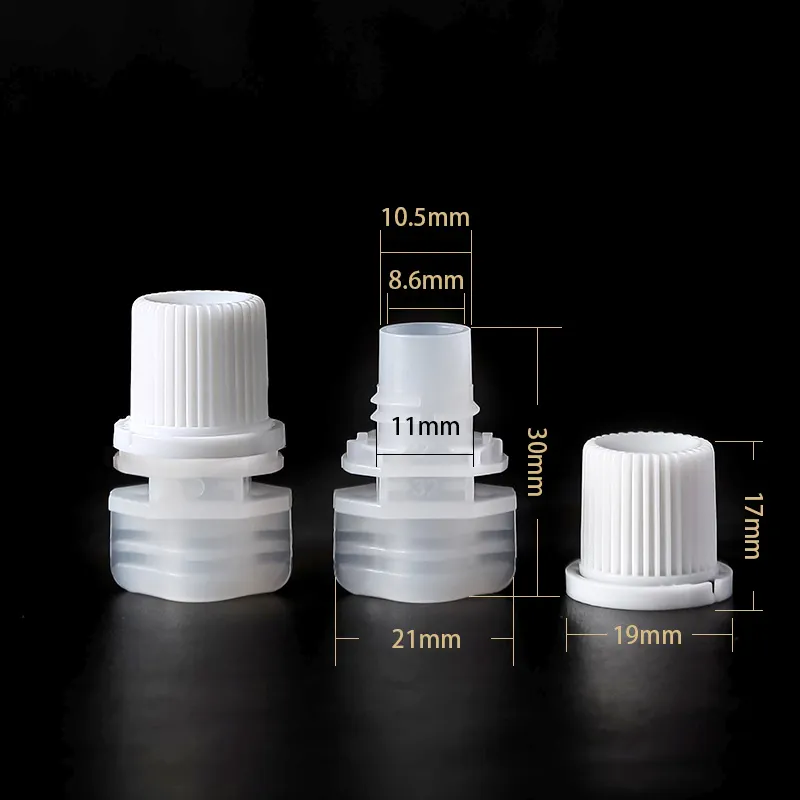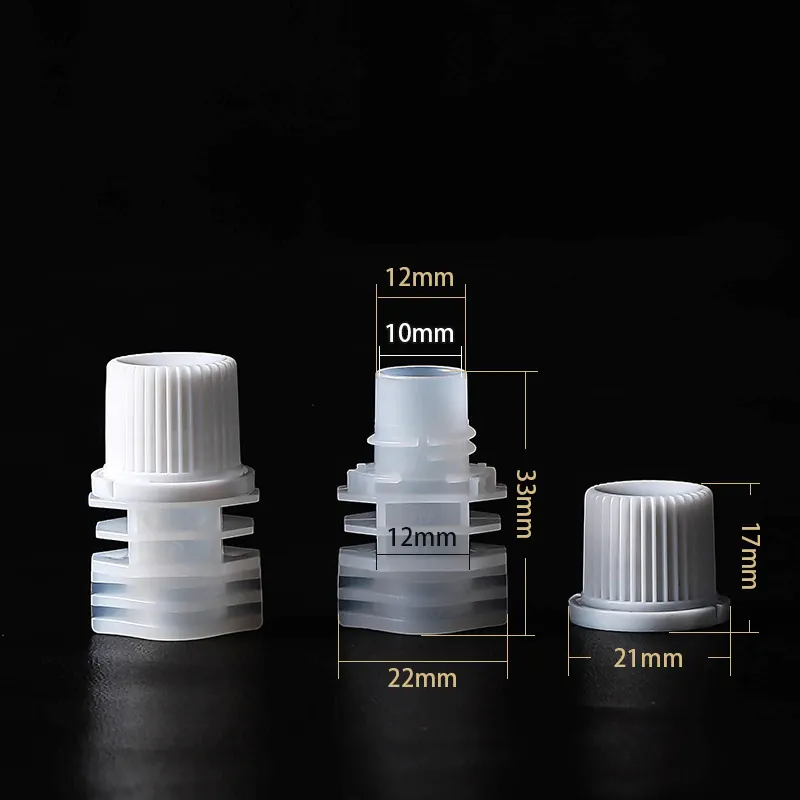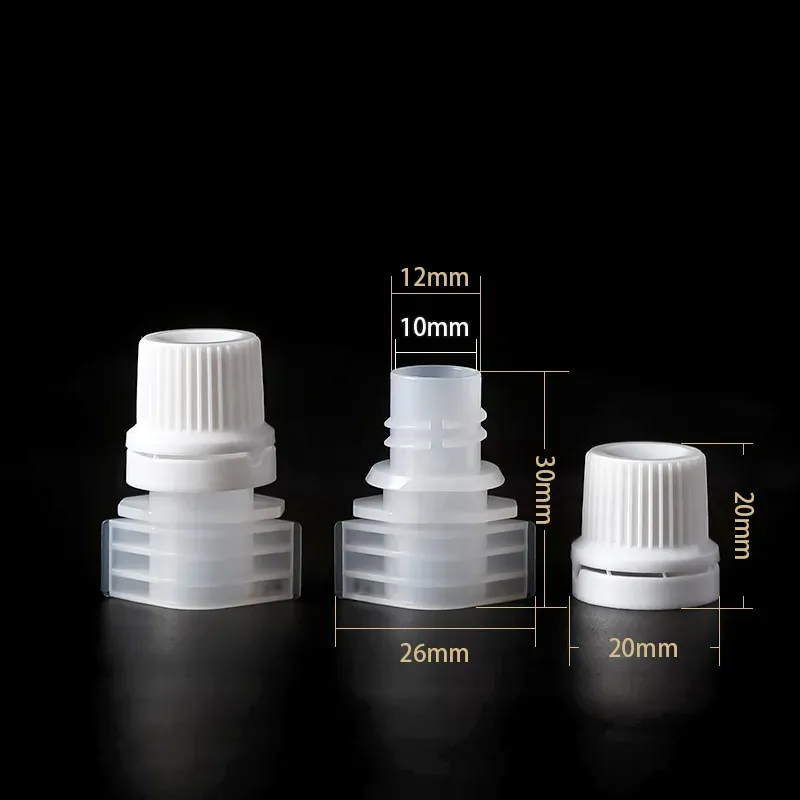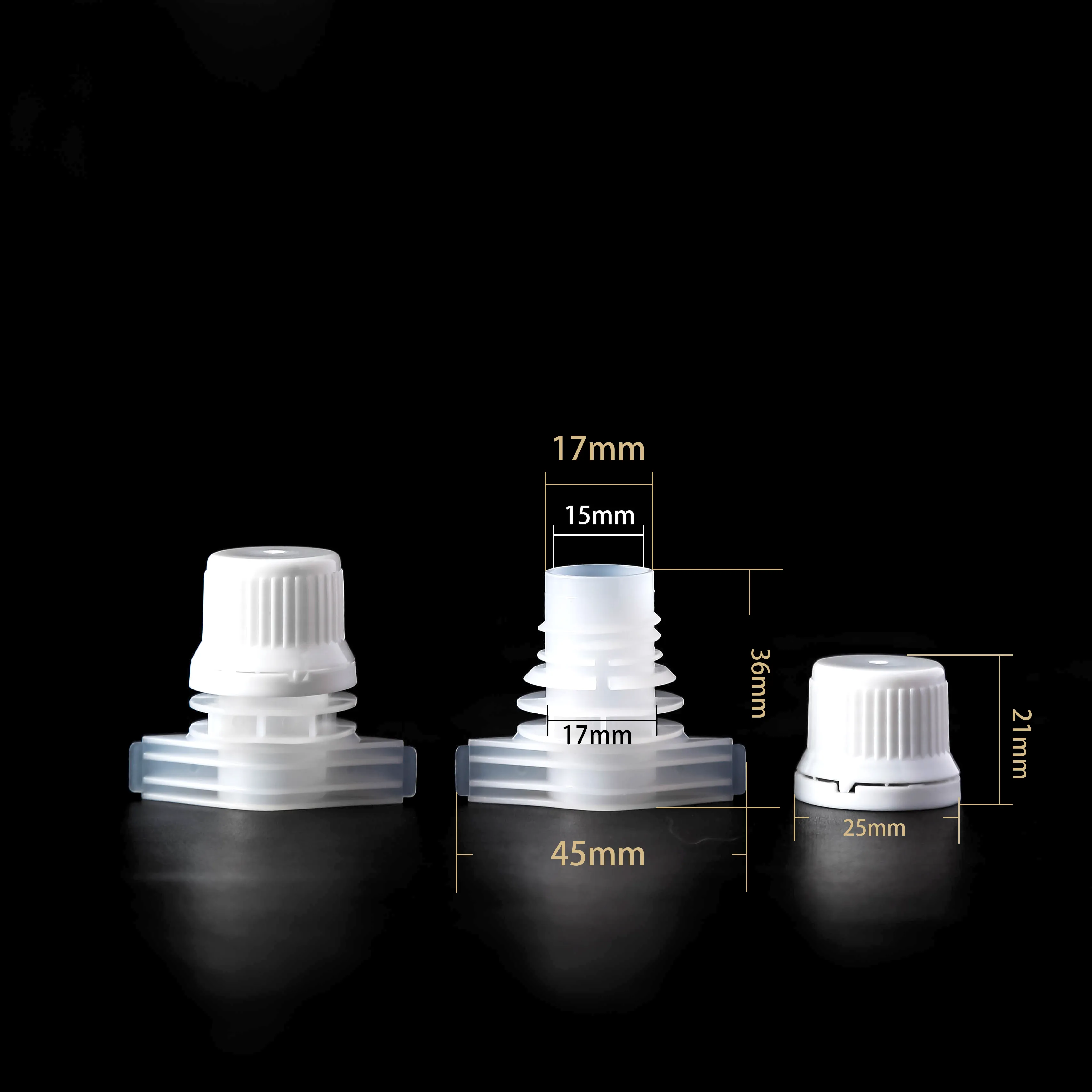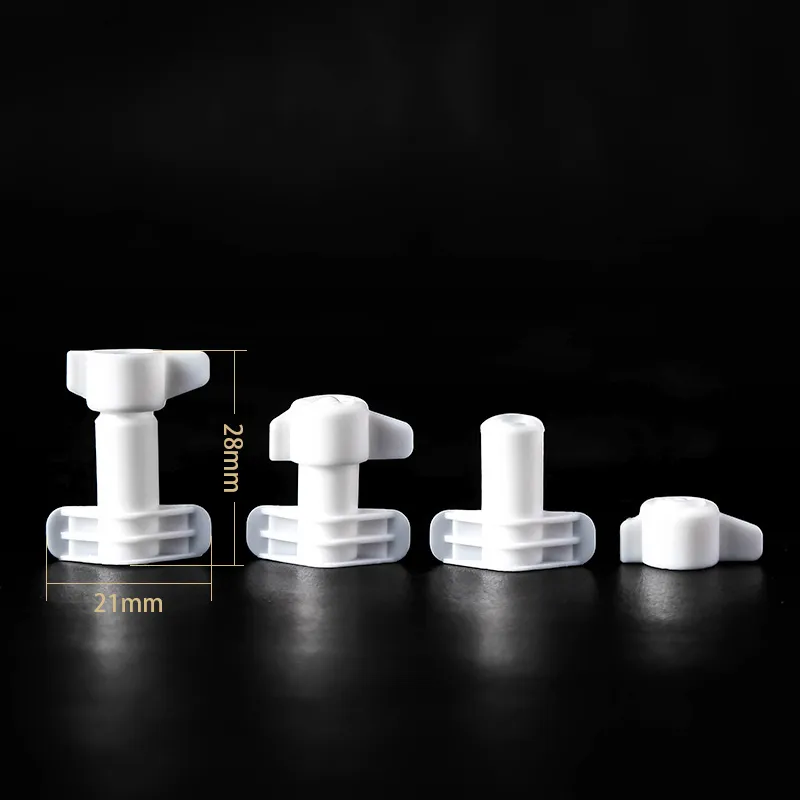







Choosing accessories for a doypack is not simply a matter of selecting a cap that fits the pouch. For a spout pouch with cap, the spout opening, material, pouch film, sealing process, and filling equipment all need to work together.
For packaging buyers, brands, and flexible packaging manufacturers, the selection process can be simplified into a practical chain:
Product → viscosity → spout opening → material → pouch film → heat sealing → filling and capping line
Together with Sanrun, a professional spout cap accessories manufacturer, to understand this relationship to avoid problems such as poor dispensing, incompatible sealing, loose caps, and leakage during production or transportation.
What Spout and Cap Specifications Need to Be Selected?
Before sourcing a pouch with cap, buyers should define more than the basic appearance of the accessory. The spout and cap should be specified according to the product and packaging process.
Spout Opening and Diameter
The spout opening directly affects how easily the product can flow from the pouch. The appropriate size depends largely on the product’s viscosity and, where applicable, the size of any particles in the product.
The external dimensions of the spout also matter because they determine compatibility with the cap, pouch attachment structure, and production equipment.
Cap Type and Closure Structure
Different closure designs provide different dispensing and resealing functions.
A screw cap is suitable when repeated opening and closing are required, while a flip-top design can provide convenient one-handed dispensing. Other closure structures may be selected according to tamper-evident or application-specific requirements.
The important point is that the cap should be matched to the spout neck and thread structure rather than selected independently.
Spout Position and Attachment Structure
The spout’s position on the doypack affects both usability and manufacturing.
Its attachment geometry needs to correspond with the pouch design and sealing process. For automated production, dimensional consistency is also important because variations can affect spout insertion, positioning, and subsequent filling operations.

How Does Liquid Viscosity Determine Spout Size?
Liquid viscosity is one of the most important factors when selecting a spout for a doypack with spout and cap.
As viscosity increases, the product generally encounters greater resistance when passing through the opening. Therefore, the spout opening should be selected according to the desired dispensing behavior rather than simply the pouch size.
Thin Liquids Need More Flow Control
Low-viscosity products can flow relatively easily through a spout.
A smaller or medium opening may therefore provide better control during pouring or dispensing. An unnecessarily large opening can make the product more difficult to control, particularly when the pouch is squeezed.
Thick Liquids Need More Flow Capacity
High-viscosity products require more flow capacity.
A larger opening can reduce resistance and make dispensing easier. This is particularly relevant for products such as thick sauces, pastes, or other viscous formulations.
If the product contains particles, the opening should also be considered in relation to particle size to reduce the risk of blockage.
Match Spout Size to the Actual Product
Product category alone is not enough to determine the correct opening.
Two products in the same category may have significantly different viscosities and dispensing requirements. Buyers should therefore provide the actual product characteristics when discussing spout specifications with a spout cap supplier.
Liquid Viscosity and Spout Opening Selection
| Product condition | Flow characteristic | General selection direction |
|---|---|---|
| Low viscosity | Flows easily | Smaller or medium opening for control |
| Medium viscosity | Moderate flow resistance | Medium opening |
| High viscosity | Higher flow resistance | Larger opening |
| Contains particles | Possible blockage | Opening should account for particle size |
These are general selection directions rather than universal diameter standards. The final opening should be determined according to the actual product and dispensing requirements.

How to Choose Between PP and PE Spout Materials?
Material selection affects the spout’s rigidity, flexibility, dimensional behavior, and interaction with the pouch film.
For a spout pouch with cap, PP and PE are common material options, but the choice should be based on the complete packaging system rather than the spout alone.
PP Spout and Cap
PP generally provides a relatively rigid structure and good dimensional stability.
It can be considered when the application requires a firmer spout and closure structure. However, the selected PP grade and structure still need to be compatible with the pouch film and intended sealing process.
PE Spout and Cap
PE generally provides greater flexibility compared with PP.
It can be suitable when a more flexible spout structure is preferred. As with PP, the specific material, pouch structure, and sealing conditions need to be considered together.
PP vs. PE Selection
| Factor | PP | PE |
|---|---|---|
| Rigidity | Generally higher | Generally more flexible |
| Flexibility | Lower | Higher |
| Structural feel | Firmer | Softer/more flexible |
| Selection focus | Product + pouch + processing | Product + pouch + processing |
There is no universal material that is suitable for every application. The correct choice depends on the product, pouch construction, sealing requirements, and desired mechanical properties.

How Does the Spout Work With the Doypack Film?
The spout and pouch film should be treated as a complete sealing system. Selecting a spout without considering the film structure can create compatibility problems during pouch production.
Film Sealing Layer and Spout Material
The film sealing layer must be compatible with the spout material, so the two can form a suitable bond under the required heat-sealing conditions.
The objective is not simply to make the film attach to the spout, but to create a consistent attachment around the spout area.
Spout Geometry and Sealing Conditions
The spout attachment area, sealing temperature, and pressure work together to determine how the film bonds to the spout.
A suitable combination provides sufficient attachment strength while maintaining a continuous sealing interface.
The basic relationship can be understood as:
Spout attachment area → sealing temperature + pressure → bonding → attachment strength
Why Film Structure Cannot Be Selected Separately
The complete interaction can be viewed as:
Film material → spout material → sealing conditions → attachment strength → leak resistance
Changing one element can affect the performance of the others. Therefore, buyers should evaluate the spout and pouch film as one system instead of selecting accessories independently.
This is particularly important when developing a custom spout cap solution for a new pouch structure.
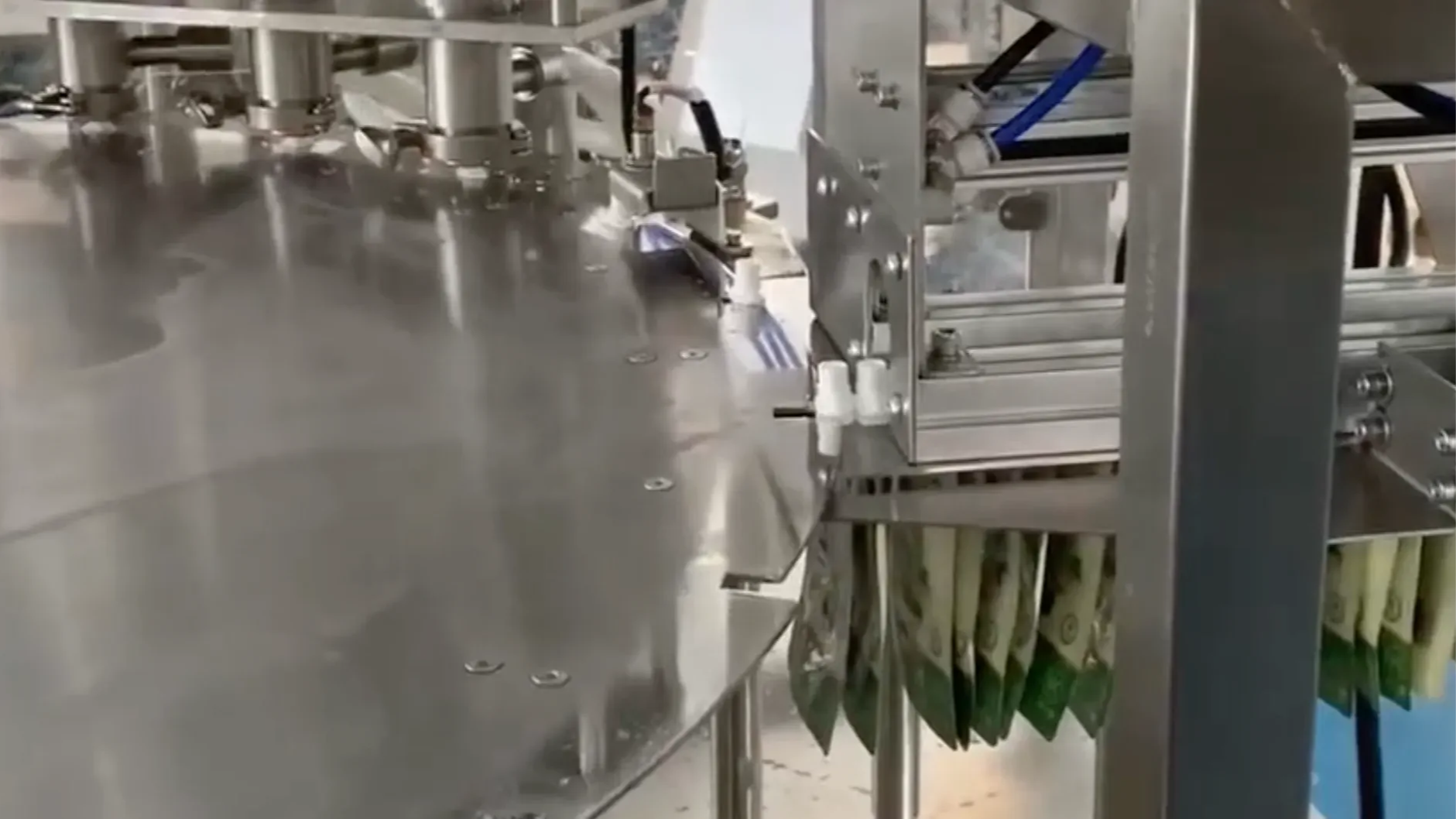
How to Check Compatibility With the Filling and Capping Line?
A suitable doypack with spout and cap must also work with the actual filling and capping process.
The packaging component may perform well as an individual product but still create production problems if its dimensions or closure structure do not match the equipment.
Spout Dimensions and Pouch-Making Equipment
Spout dimensions and attachment geometry need to correspond with the pouch-making and spout-insertion process.
The position of the spout on the pouch also affects how the pouch is handled and positioned during production.
Cap Dimensions and Feeding System
For automated lines, cap geometry and dimensional consistency affect the movement and positioning of caps during production.
The relationship is:
Cap dimensions → cap feeding → positioning → application
Consistent dimensions help the cap move through the system with fewer variations.
Cap Application and Torque
The cap and capping equipment also need to work together.
The basic relationship is:
Cap/thread design → application torque → closure engagement → sealing performance
The appropriate application torque depends on the closure design and equipment, so it should not be treated as a universal value.
Production Speed and Dimensional Consistency
Higher-volume automated production places greater demands on dimensional consistency.
Variations in:
- Spout dimensions
- Cap dimensions
- Thread geometry
- Spout position
can affect feeding, application, rejection rates, and overall line stability.
For this reason, buyers looking for a wholesale spout cap solution should consider production-line compatibility alongside material and appearance.
Doypack Spout and Cap Selection Table
The following table provides a practical framework for connecting the major selection factors:
| Selection factor | What to consider | What it affects |
|---|---|---|
| Product | Liquid type and formulation | Material and dispensing requirements |
| Viscosity | Thin, medium, or thick | Spout opening |
| Particles | Particle size, if applicable | Opening requirement |
| Pouch size | Capacity and filled weight | Spout attachment requirements |
| Film structure | Sealing layer and material | Heat-sealing compatibility |
| Spout material | PP or PE | Rigidity, flexibility, sealing |
| Cap type | Screw, flip-top, etc. | Closure and resealing |
| Filling process | Manual or automatic | Spout configuration |
| Capping process | Equipment and torque | Closure consistency |
| Pouch design | Spout position and structure | Equipment and usability |
This table can be used as a starting point when preparing a specification for a new pouch with cap project.
How to Build a Complete Specification for a Doypack With Spout and Cap
Instead of asking a supplier for a generic “spout cap,” buyers can provide a complete specification based on the entire packaging system.
Start With the Product
First define:
- Product type
- Viscosity
- Particle content, if applicable
- Desired dispensing behavior
These factors provide the basis for selecting the spout opening and material.
Define the Spout and Cap
The accessory specification should then include:
- Spout opening
- Overall dimensions
- Material
- Cap type
- Closure/thread structure
- Spout position
This gives the manufacturer enough information to evaluate the accessory against the pouch and production requirements.
Match the Pouch and Sealing Process
The pouch side should include:
- Film structure
- Sealing layer
- Spout attachment method
- Sealing equipment or process
The spout and pouch should be evaluated together because their materials and sealing conditions directly affect attachment performance and leak resistance.
Match the Production Line
Finally, provide information about:
- Filling method
- Capping method
- Equipment requirements
- Production speed
- Existing dimensional requirements or tolerances
The complete specification can therefore be summarized as:
Product → viscosity → opening → material → pouch film → sealing → production line
This approach allows a spout cap manufacturer to evaluate the accessory as part of the complete packaging process rather than as an isolated component.
Conclusion
Selecting accessories for a spout pouch with cap is a compatibility decision involving the product, spout, cap, pouch film, sealing process, and production equipment.
The main selection principles are straightforward:
- Viscosity influences the required spout opening.
- PP or PE affects the spout’s mechanical characteristics and compatibility.
- Pouch film and spout material must form a suitable sealing system.
- Spout and cap dimensions must match filling and capping equipment.
- Dimensional consistency becomes increasingly important for automated production.
For buyers, the most effective approach is to define the complete specification from the beginning rather than selecting the cap separately from the pouch. This makes it easier to evaluate compatibility, production requirements, and the final dispensing performance before moving into bulk production.
About Sanrun – Manufacturer Of Spout Caps For Doypacks
Sanrun is a professional spout cap manufacturer serving global packaging brands, flexible packaging manufacturers, OEM factories, and distributors. With a customer-focused approach, Sanrun provides OEM and ODM customization for flexible packaging accessories, covering colors, dimensions, custom molds, and functional designs for different packaging applications. Its solutions are suitable for packaging formats such as spout pouch with cap, doypack with spout and cap, and other types of pouch with cap, allowing buyers to match spout accessories with their products, pouch structures, and filling requirements.
Products are manufactured under strict quality control, covering raw materials, production, and final inspection, with ISO, FDA, QS, and BRC certifications supporting international packaging requirements. From standard spout caps to fully customized solutions, Sanrun works closely with B2B customers to select suitable materials, dimensions, closure structures, and attachment configurations for their packaging systems.
Whether a buyer needs a standard pouch with cap component or a customized solution for a spout pouch with cap, Sanrun combines manufacturing expertise, OEM/ODM capabilities, and production support to provide spout cap solutions aligned with specific product, packaging, and production needs.
FAQ
What spout size is suitable for a doypack?
The appropriate spout size depends mainly on product viscosity, dispensing requirements, and particle content where applicable. Thicker products generally require greater flow capacity than thin liquids.
How does liquid viscosity affect spout diameter?
Higher viscosity generally creates greater flow resistance, so a larger opening may be needed for easier dispensing. Lower-viscosity liquids can generally use smaller openings when better flow control is required.
Is PP or PE better for a doypack spout?
Neither is universally better. PP generally provides a more rigid structure, while PE generally offers greater flexibility. The final choice should also consider the pouch film and sealing process. View more details at PPvsHDPE for spout cap accessories for doypack
How does the spout need to match the pouch film?
The film’s sealing layer needs to be compatible with the spout material. Spout geometry, sealing temperature, and pressure then work together to determine the attachment strength and leak resistance.
Does the spout need to match the filling machine?
Yes. Spout dimensions, position, and cap geometry can affect pouch handling, filling, cap feeding, and capping. This is especially important for automated production.
What information should I provide when selecting a pouch spout and cap?
Provide the product type, viscosity, particle content if applicable, desired opening, pouch film structure, spout material, cap type, filling method, and capping equipment requirements.
Can the same spout and cap be used for different liquid products?
Not necessarily. Different products can have different viscosity, dispensing, chemical compatibility, and sealing requirements. The accessory should be evaluated against the specific product and pouch structure.